
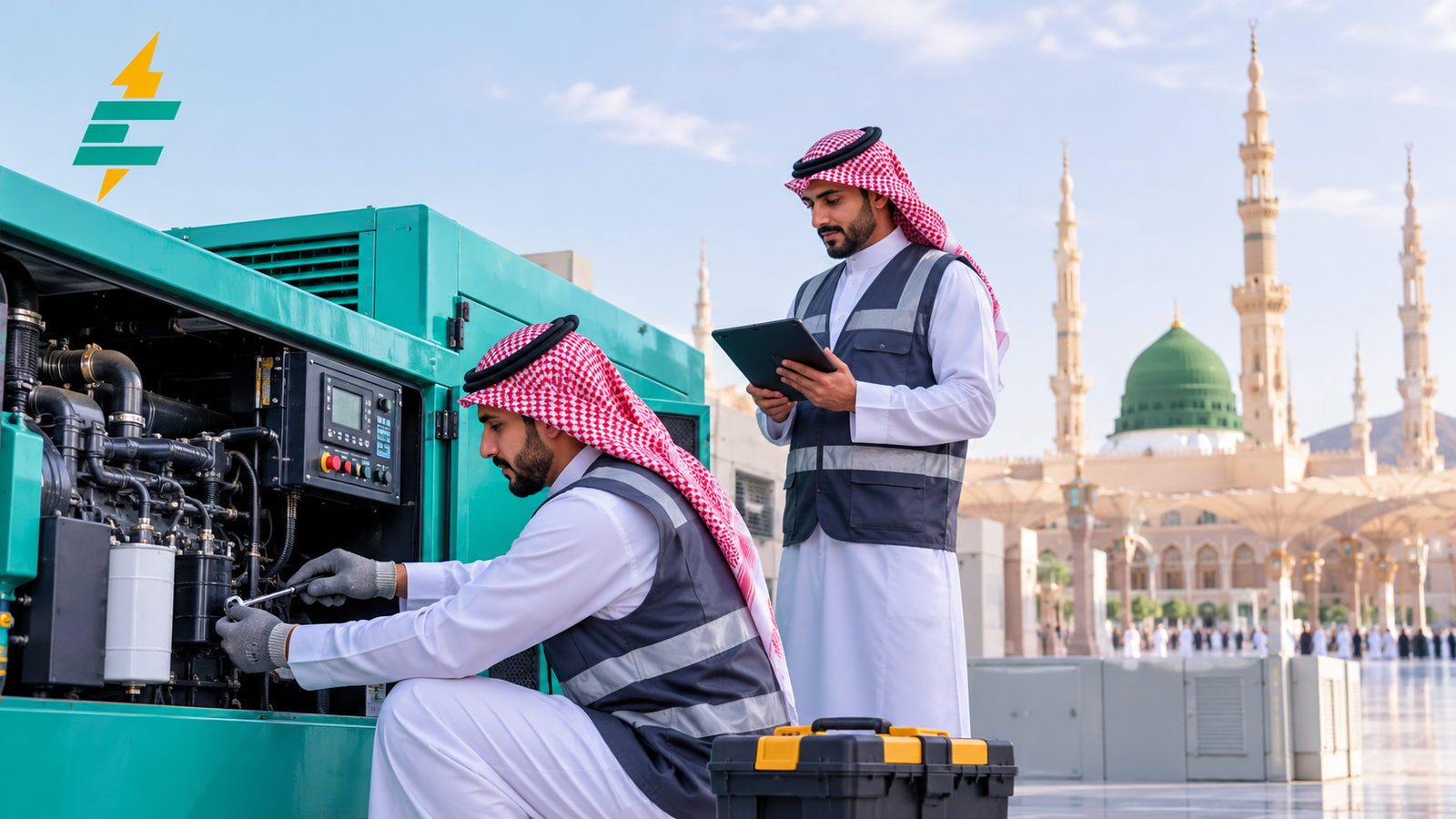

Main Keyword: Regular Maintenance of Backup Generators
Secondary Keywords: Generator Maintenance in Madinah, Diesel Generator Maintenance in Madinah, Generator Maintenance for Factories, Regular Electrical Generator Maintenance, Diesel Generator Repair, Mobile Generator Maintenance, Electrical Generator Inspection and Repair, Generator Diesel Engine Maintenance, Generator Maintenance for Companies, Generator Maintenance for Projects, On-Site Generator Maintenance Services, Generator Maintenance Technician in Madinah.
Introduction
Many commercial and industrial facilities, as well as construction projects in Madinah, rely on backup generators to ensure business continuity during power outages or unexpected disruptions to the main electricity supply. A generator is not simply a device that provides electricity when needed; it is an essential component of operational stability, equipment protection, and minimizing financial losses caused by unexpected power interruptions.
However, owning a backup generator does not automatically guarantee that it will be ready to operate whenever required. Generators need ongoing technical monitoring, regular inspections, oil and filter changes, and thorough testing of their starting, cooling, and fuel systems. This is where regular maintenance of backup generators becomes essential for maintaining performance, extending equipment lifespan, and reducing the risk of unexpected breakdowns.
These procedures are particularly important for facilities that cannot afford power interruptions, including hospitals, factories, warehouses, commercial buildings, and construction sites. Having a suitable maintenance program and working with qualified technicians helps ensure that backup power is available whenever it is needed.
In this guide, we will explore the importance of generator maintenance in Madinah, essential inspection and maintenance procedures, how to handle common diesel generator problems, and what to consider when choosing a reliable generator maintenance company.
Why Do Electrical Generators Need Regular Maintenance?
A generator may operate for extended periods without showing any obvious problems. However, this does not necessarily mean that all its components are functioning at optimal performance levels. Some issues develop gradually, such as a weakening battery, clogged filters, or reduced cooling efficiency, before eventually leading to more serious problems that may prevent the generator from starting when needed.
Regular maintenance of backup generators helps identify these issues before they affect performance. It also allows facility owners to address potential problems early rather than waiting until the generator completely stops working.
The main benefits of regular maintenance include:
- Reducing unexpected breakdowns: Routine inspections help identify components that require cleaning, repair, or replacement before they cause operational interruptions.
- Extending generator lifespan: Proper maintenance of the engine, cooling system, and fuel system reduces unnecessary stress on internal components.
- Improving fuel efficiency: Maintaining filters, engine performance, and combustion systems helps prevent issues that may increase fuel consumption.
- Maintaining stable power output: Regular testing helps ensure that the generator supplies electricity at the appropriate voltage and frequency.
- Reducing repair expenses: Addressing minor problems early is generally less expensive than repairing major failures caused by neglected maintenance.
- Improving operational safety: Inspecting electrical connections, fuel leaks, and protection systems helps reduce potential hazards associated with generator operation.
It is important to understand that generators do not only require maintenance when they operate for long hours. Even backup generators that are rarely used need regular inspections because extended periods of inactivity can affect batteries, stored fuel, and other components.
The Importance of Generator Maintenance in Madinah
Facilities throughout Madinah need reliable power sources to maintain uninterrupted operations, especially businesses that depend on electricity for operating equipment, preserving products, or providing daily services.
Generator maintenance requirements vary depending on the facility’s activities, required electrical capacity, operating hours, and installation environment. Therefore, applying the same maintenance schedule to every generator is not always appropriate. Instead, each generator needs a maintenance program based on its actual operating conditions.
Generator maintenance in Madinah is particularly important across several sectors.
1. Hospitals and Medical Centers
Healthcare facilities depend on electricity to operate medical equipment, monitoring systems, refrigeration units, lighting, and essential infrastructure. Unexpected power interruptions can affect the continuity of critical services.
These facilities require careful monitoring of backup generators, including automatic starting systems, batteries, control panels, and electrical transfer systems.
It is also recommended to document inspections, maintenance procedures, and operational tests to ensure that the generator’s condition is always clear to the facility management team.
2. Factories and Industrial Facilities
Factories require generators with suitable electrical capacities to operate machinery, production lines, and supporting systems. A generator failure may interrupt production, affect product quality, or increase operational costs.
Generator maintenance for factories should focus on the engine, alternator, fuel system, and cooling system, as well as load testing and ensuring that generator capacity matches operational requirements.
A clear maintenance plan should also be established based on actual operating hours, with scheduled inspections and replacement of consumable components.
3. Hotels and Commercial Buildings
Hotels, shopping centers, and commercial facilities need continuous electricity to operate elevators, air conditioning systems, lighting, and other essential equipment.
Regular maintenance helps ensure that generators remain ready for use, particularly in facilities that operate for extended hours or accommodate large numbers of visitors.
4. Construction Sites and Engineering Projects
Construction projects use generators to power machinery, electrical tools, temporary lighting, and other equipment. These generators are often exposed to dust, vibration, and frequent transportation.
Generator maintenance for projects should therefore include inspections of external components, electrical connections, cooling systems, and air filters, especially after transportation or relocation.
5. Warehouses and Storage Facilities
Some warehouses rely on electricity to operate refrigeration systems, storage equipment, and security monitoring systems. Extended power interruptions can damage certain products or affect their storage conditions.
Preventive maintenance helps reduce the possibility of generator failure during critical operating periods, particularly in facilities that require continuous power.
What Is the Difference Between Preventive and Corrective Maintenance?
When discussing generator maintenance, it is important to understand the difference between two main maintenance approaches. Each serves a different purpose in maintaining generator performance.
Preventive Maintenance
Preventive maintenance involves scheduled procedures designed to reduce the likelihood of equipment failure before problems occur.
Typical preventive maintenance tasks include:
- Changing engine oil according to manufacturer recommendations.
- Inspecting oil, fuel, and air filters.
- Checking battery condition and the charging system.
- Inspecting the cooling system and coolant levels.
- Reviewing electrical connections.
- Checking for fuel, oil, or coolant leaks.
- Testing generator operation and monitoring performance.
One of the main advantages of preventive maintenance is that it allows businesses to plan maintenance activities and expenses instead of dealing with unexpected breakdowns.
Corrective Maintenance
Corrective maintenance is performed when a fault is identified or generator performance noticeably decreases. Its purpose is to diagnose the problem, repair the affected components, and restore the generator to proper operating condition.
Examples include repairing fuel leaks, replacing a damaged battery, resolving cooling system problems, or repairing control panel components.
Although corrective maintenance is important, relying on it alone is not the best approach for facilities that depend on reliable backup power.
Which approach is better?
The best solution is to combine both approaches. Preventive maintenance reduces the likelihood of breakdowns, while corrective maintenance addresses problems that may still occur during operation or inspection.
Essential Maintenance Tasks for Backup Generators
Electrical generators consist of several mechanical and electrical systems that work together to produce electricity. Therefore, maintenance should cover all major components rather than focusing only on oil changes or external cleaning.
1. Engine Oil Inspection and Replacement
Engine oil plays an essential role in reducing friction between internal engine components. It also helps control operating temperatures and minimize wear caused by continuous operation.
Over time, oil loses some of its properties due to heat exposure and the accumulation of contaminants. It should therefore be replaced according to operating hours or the time intervals specified by the manufacturer.
Important maintenance steps include:
- Using oil with the correct specifications and viscosity.
- Checking oil levels before operation according to manufacturer instructions.
- Inspecting for oil leaks.
- Replacing the oil filter at the recommended interval.
- Recording oil replacement dates and generator operating hours.
Oil replacement should not be postponed simply because the generator has not operated frequently. Storage conditions and elapsed time can also affect oil quality.
2. Air Filter Inspection
Diesel engines require an adequate supply of air for efficient combustion. When dust accumulates inside the air filter, airflow to the engine becomes restricted, potentially affecting performance and fuel consumption.
This is particularly important in locations exposed to dust and sand, where filters may become clogged more quickly than usual.
Maintenance includes inspecting the filter, cleaning or replacing it according to manufacturer instructions, and ensuring that the air intake system is free from obstructions.
3. Fuel System Inspection
The fuel system directly affects the generator’s ability to start and produce electricity. Problems involving fuel quality, filters, or fuel supply lines may cause difficult starting or unexpected engine shutdowns.
Fuel system maintenance should include:
- Inspecting the fuel tank and ensuring it is clean.
- Checking for fuel leaks.
- Inspecting and replacing fuel filters when necessary.
- Reviewing hoses and fuel connections.
- Ensuring that the correct fuel quality is used.
- Inspecting the injection system when unusual symptoms appear.
Fuel should not be stored for extended periods without following appropriate storage procedures, as its quality may deteriorate or sediment may accumulate and affect the system.
4. Battery and Charging System Inspection
The battery is one of the most important components in generators that rely on electric starting or automatic operation during power outages.
A weak battery may prevent the generator from starting even when the engine and other components are functioning properly.
Regular battery maintenance should include checking:
- Battery charge level.
- Terminal and connection condition.
- Corrosion or deposits.
- Charging system performance.
- Cable condition.
- The battery’s ability to provide the required starting power.
This is especially important for backup generators that remain inactive for extended periods, as their batteries still require monitoring even when the engine is not running.
5. Cooling System Inspection
The cooling system maintains engine temperature within the appropriate operating range and prevents overheating that could damage internal components.
Inspection should cover coolant levels, radiator condition, hoses, cooling fans, and the water pump. Technicians should also check for leaks, blockages, or restricted airflow.
Cleaning components that accumulate dust is equally important because reduced airflow can negatively affect cooling efficiency.
6. Alternator and Electrical Connection Inspection
Generator maintenance does not end with the diesel engine. Electrical components also require regular inspection to ensure that electricity is produced at the correct specifications.
These procedures include checking cables and connections, reviewing the control panel, inspecting the voltage regulator and protection systems, and monitoring voltage and frequency readings.
Electrical testing should always be performed by qualified technicians following appropriate safety procedures, including isolating power sources whenever necessary.
7. Belt and Hose Inspection
Belts and hoses may become cracked, loose, or worn over time, particularly in generators operating for long hours or under demanding conditions.
Regular inspections should verify their condition, check mounting points, and replace damaged components before they cause more serious problems.
8. Generator Load Testing
One of the most important maintenance procedures is verifying that the generator can operate under actual or suitable simulated electrical loads.
A generator may appear to operate normally without a load but experience problems when connected to electrical equipment.
Load testing helps evaluate voltage stability, frequency, temperature, and engine response. It can also reveal problems that may not appear during normal no-load operation.
Testing should always be performed according to generator capacity and manufacturer recommendations by qualified specialists.
Regular Electrical Generator Maintenance Schedule
There is no single maintenance schedule suitable for every generator. Maintenance intervals depend on engine type, manufacturer specifications, operating hours, and working conditions.
However, the following table provides a general maintenance framework that can be adjusted according to the manufacturer’s operating manual.
| Maintenance Period | Recommended Tasks |
| Before operation | Check oil, fuel, coolant, leaks, and battery condition |
| Weekly | Monitor battery condition, inspect connections, check the generator’s overall condition, and perform scheduled test runs |
| Monthly | Inspect filters, hoses, belts, cooling systems, and electrical connections |
| Based on operating hours | Replace oil and filters and inspect components according to manufacturer recommendations |
| Semi-annually or annually | Perform comprehensive inspections, performance testing, and protection system checks as recommended by the manufacturer |
It is also recommended to maintain a service record containing the date of each maintenance procedure, operating hours, replaced components, and technical observations.
This record helps determine the generator’s condition, anticipate future maintenance requirements, and maintain continuity when technicians or service providers change.
Diesel Generator Maintenance in Madinah: What Should You Focus On?
Diesel generators are widely used in factories, construction projects, and commercial facilities because they can provide reliable power for different applications when properly selected and maintained.
However, diesel generators require special attention to several components that directly affect engine efficiency and operating stability.
When arranging diesel generator maintenance in Madinah, the following areas deserve particular attention.
Fuel Injection System
The fuel injection system delivers the correct amount of fuel to the engine at the appropriate time. Problems with injectors or the injection pump may cause reduced performance, increased fuel consumption, or unusual exhaust smoke.
The system should be inspected whenever signs of malfunction appear. Adjustments should not be attempted without appropriate technical expertise.
Diesel Fuel Filters
Fuel filters prevent contaminants and water from reaching sensitive fuel system components. As contaminants accumulate, fuel flow may become restricted, negatively affecting engine performance.
Filters should be replaced according to the recommended schedule, and the water separator should also be inspected if the generator is equipped with one.
Engine and Exhaust System
Generator diesel engine maintenance requires monitoring engine condition, unusual sounds, vibration, and operating temperatures. Technicians should also inspect the exhaust system for leaks or blockages.
Changes in exhaust smoke color or excessive smoke should not be ignored, as they may indicate combustion problems, oil consumption, or fuel system issues.
Automatic Starting System
Some backup generators use automatic starting systems that activate when the main electricity supply is interrupted.
For this reason, the control unit, transfer system, and battery should be tested to ensure that the generator responds correctly to the required signals.
Neglecting these tests may result in a generator that starts normally in manual mode but fails to start automatically during an unexpected power outage.
Common Diesel Generator Problems and How to Handle Them
Even with proper maintenance, generators may develop problems due to operating conditions, component wear, or technical faults. The important thing is to recognize early warning signs and respond appropriately.
1. The Generator Does Not Start
This is one of the most common generator problems and may result from:
- A weak or discharged battery.
- A fault in the starting circuit.
- Insufficient fuel.
- A clogged fuel filter.
- A control panel malfunction.
- An activated protection system.
Initial troubleshooting usually involves checking basic indicators. However, if the problem continues, a qualified technician should identify the underlying cause.
2. The Generator Starts but Then Stops
This may happen because of engine overheating, low fuel levels, protection system activation, or a problem with fuel delivery.
Repeatedly restarting the generator without identifying the cause should be avoided, as doing so may make the problem worse.
3. Engine Overheating
Possible causes include insufficient coolant, a dirty radiator, poor fan performance, or a malfunctioning water pump.
When abnormal temperature increases are detected, the generator should be handled carefully and shut down according to safe operating procedures before inspecting the cooling system.
4. Low Electrical Voltage
Low voltage may be associated with the voltage regulator, generating system, electrical connections, or excessive electrical loads.
This problem requires professional inspection because unstable electricity may damage connected equipment.
5. Black, White, or Blue Exhaust Smoke
Black smoke may indicate combustion problems or an imbalance between fuel delivery and available air.
Blue smoke may indicate engine oil burning, while white smoke can have several possible causes, including fuel-related combustion issues or, in certain cases, coolant entering the combustion chamber.
Smoke color alone cannot determine the exact fault. A proper technical diagnosis should be performed before replacing any components.
6. Increased Fuel Consumption
Higher fuel consumption may result from operating the generator above its suitable load capacity, clogged filters, reduced engine efficiency, or fuel injection problems.
Fuel consumption should be compared with actual operating hours and electrical loads to determine whether the issue is technical or related to operating practices.
7. Unusual Vibrations and Noise
These symptoms may indicate loose generator mounting, worn components, or mechanical faults.
The source of the vibration should be inspected rather than ignored, as continued operation may affect electrical connections and surrounding components.
Generator Maintenance for Factories, Companies, and Projects
Maintenance requirements vary according to the facility’s activities. Therefore, each generator needs a maintenance program based on its importance, electrical loads, and operating hours.
Generator Maintenance for Companies
Companies need reliable backup power to maintain daily operations, especially when business activities depend on computers, servers, communication systems, air conditioning, and office equipment.
A suitable maintenance program should include battery and control panel inspections, automatic starting system testing, and verification that the generator can support essential electrical loads.
Scheduled maintenance contracts also help establish responsibilities, organize technical visits, and document equipment condition.
Generator Maintenance for Factories
Factories require special attention to electrical loads because industrial machinery may place different demands on generators compared with office buildings.
It is essential to review generator capacity, ensure compatibility with electrical loads, test voltage and frequency stability, and monitor engine performance during actual operation.
A clear breakdown response plan should also be established to minimize interruptions to production lines and identify components requiring more frequent monitoring.
Generator Maintenance for Projects
Construction and temporary projects require flexible maintenance solutions that can adapt to changing work locations and operating conditions.
Generators should be inspected before transportation and after installation at a new site. Technicians should also check cable condition, grounding, ventilation, and operating location.
Monitoring actual operating hours is equally important because generators used at construction sites may operate for extended periods under changing loads.
When Do You Need On-Site Generator Maintenance Services?
Not every maintenance procedure requires transporting a generator to an external workshop. Many inspections and repairs can be completed at the customer’s location, saving time and reducing equipment downtime.
On-site generator maintenance services are particularly suitable for:
- Routine inspections of installed generators.
- Oil and filter replacement according to maintenance schedules.
- Battery and electrical connection inspections.
- Diagnosing certain starting problems.
- Inspecting cooling and fuel systems.
- Performing generator load tests.
- Maintaining generators used at project sites.
However, certain faults may require specialized equipment or workshop repairs. The technician should determine the appropriate approach after inspecting the generator.
When requesting maintenance, it is helpful to provide clear information about the generator, including its manufacturer, model, electrical capacity, operating hours, and the nature of the problem. This allows the service provider to prepare the appropriate tools and spare parts whenever possible.
Mobile Generator Maintenance
Mobile generators are commonly used at construction sites, events, temporary projects, and locations requiring portable power sources.
Unlike stationary generators, mobile units are frequently exposed to transportation, vibration, and changing operating environments.
Mobile generator maintenance should therefore include several additional procedures:
- Inspecting the external structure for transportation-related damage.
- Checking mounting supports and trailer components, where applicable.
- Inspecting cables and electrical connections.
- Ensuring that ventilation and cooling systems operate properly.
- Inspecting fuel tanks and connections.
- Reviewing grounding systems and electrical protection devices.
- Testing generator operation after transportation and installation.
The generator should also be positioned on a suitable surface, with sufficient ventilation clearance. It must never be operated in enclosed or inadequately ventilated areas where exhaust gases cannot be safely discharged.
How to Choose the Best Electrical Generator Maintenance Company
Choosing a generator maintenance company should not depend on price alone. Technical experience, the ability to work with your generator type, and the company’s ability to meet your facility’s requirements are equally important.
When looking for the best electrical generator maintenance company, consider the following factors.
Experience with Different Generator Types
Make sure the company has experience maintaining the generators you use, whether diesel generators, industrial generators, or backup generators installed in buildings.
Technical knowledge of engine types and control systems helps ensure more accurate fault diagnosis.
Qualified Maintenance Technicians
The company should have technicians capable of inspecting mechanical and electrical components, diagnosing faults, and performing maintenance according to appropriate safety procedures.
Clear Maintenance Plans
It is preferable to work with a company that provides a clear maintenance plan covering service visits, required inspections, spare parts, and technical reports.
Fast Response Times
Fast response is particularly important for facilities that depend on generators to provide backup electricity.
Flexible Maintenance Contracts
Scheduled contracts help organize maintenance activities. Facilities can select a suitable arrangement, such as quarterly, semi-annual, or annual maintenance, depending on their needs.
Technical Reports After Maintenance
A maintenance report should ideally include the generator’s condition, completed procedures, technical observations, replaced spare parts, and recommendations for future maintenance.
What Factors Determine Electrical Generator Maintenance Costs?
There is no fixed maintenance price for every generator because costs depend on several technical and operational factors.
The most important include:
- Generator capacity: Maintenance requirements differ between small generators and large industrial units.
- Engine type: Spare parts, consumables, and maintenance procedures vary between different engine models.
- Operating hours: Generators used for extended periods may require more frequent inspections and replacements.
- Generator condition: Units that have not received maintenance for a long time may require additional work.
- Type of service: Routine inspections differ in cost from major repairs or component replacements.
- Generator location: Travel distance and site conditions may affect on-site maintenance costs.
- Spare parts: Costs vary depending on component specifications, quality, and availability.
To obtain an appropriate estimate, provide the generator specifications and request an inspection or quotation that clearly outlines the required work.
How to Maintain Your Backup Generator Between Service Visits
Maintaining a generator does not depend exclusively on professional service visits. Several practical steps can help preserve its condition and readiness between scheduled maintenance appointments.
First: Keep the generator area clean.
Prevent dust and debris from accumulating around the generator. Make sure there are no obstructions blocking air intake or heat discharge.
Second: Monitor indicators and warning signals.
Never ignore warnings displayed on the control panel, especially those related to oil pressure, temperature, battery condition, or electrical voltage.
Third: Record operating hours.
Tracking operating hours helps determine when oil and filters need replacement and when the next maintenance appointment should be scheduled.
Fourth: Avoid exceeding generator capacity.
Electrical loads should be calculated correctly. Do not connect equipment that exceeds the generator’s rated capacity or add extra loads without confirming that the generator can support them.
Fifth: Monitor fuel condition.
Use suitable fuel and avoid improper storage or leaving fuel unused for extended periods without appropriate monitoring.
Sixth: Do not neglect generator testing.
A backup generator that rarely operates may develop problems that only become apparent when starting is attempted. Follow the manufacturer’s recommended testing schedule, including operational and load testing where required.
Seventh: Contact a qualified technician when unusual symptoms appear.
Do not attempt electrical repairs or open engine components without the appropriate knowledge and equipment. Incorrect intervention may worsen the problem or expose people and equipment to unnecessary risks.
Why Do You Need a Backup Generator Maintenance Contract?
Requesting maintenance only when a problem occurs may be suitable for some limited applications. However, it is not the best approach for facilities that depend on generators to maintain business operations.
A maintenance contract provides a structured framework for monitoring generator condition and performing inspections at scheduled intervals.
Key benefits include:
- Scheduling maintenance appointments in advance.
- Reducing the likelihood of missed inspections.
- Monitoring generator condition continuously.
- Identifying faults before they become more serious.
- Organizing maintenance budgets.
- Accessing technical support when required.
- Documenting maintenance and repair history.
Contract requirements vary according to facility size, generator quantity, and operating conditions. A factory with several generators may require a more detailed maintenance plan than a commercial facility with one backup generator.
Before signing a contract, review its terms carefully and confirm the number of service visits, included services, spare parts coverage, and procedures for handling emergency breakdowns.
Electrical Generator Inspection and Repair: Why Should It Be Performed by Specialists?
Some maintenance procedures may appear simple, but electrical generators combine mechanical systems, electrical components, and control circuits that work together. Proper fault diagnosis therefore requires specialized technical knowledge.
Electrical generator inspection and repair should begin with gathering information about the problem, reviewing operating and maintenance records, and performing the appropriate tests to identify the actual cause.
For example, if a generator stops after operating for a short period, the cause may be overheating, low fuel supply, or a problem with one of its protection systems. Replacing a component without proper diagnosis may not solve the problem.
Similarly, low electrical voltage does not necessarily indicate a fault in the generator itself. The problem may be associated with the voltage regulator, electrical connections, or the connected loads.
Working with a qualified generator maintenance technician in Madinah who has the right experience and diagnostic equipment helps achieve more accurate results and ensures that necessary repairs are performed without exposing other generator components to additional risks.
S-Energy: Comprehensive Solutions for Generator Maintenance and Operation
When searching for a specialized generator service provider, it is important to choose a company capable of supporting your requirements before installation, during operation, and after project completion.
S-Energy provides integrated solutions covering generator sales, rentals, and maintenance, alongside installation, commissioning, and engineering consultations. These services help businesses select power solutions that match their operational requirements.
The company’s services include:
- Electrical generator maintenance by specialized technicians.
- Inspection and diagnostics to identify potential faults.
- Preventive maintenance to help reduce unexpected downtime.
- Flexible quarterly, semi-annual, and annual maintenance contracts.
- Generator installation and system preparation according to site requirements.
- Generator rental options with different capacities for project requirements.
- Engineering consultations and technical support.
The company also provides generators with capacities ranging from 30 kW to 1,400 kW, depending on the requirements of different applications.
You can explore the company’s services through the Electrical Generator Maintenance page or learn more about S-Energy services.
If you are planning to purchase a new generator for your facility, explore the available options on the Generator Sales page to select a suitable capacity for your electrical requirements.
If your project requires a temporary power source, you can also explore the available solutions through the Generator Rental page.
To learn more about the company’s experience and background, visit the About Us page.
Frequently Asked Questions About Regular Maintenance of Backup Generators
How often should backup generators receive regular maintenance?
Maintenance frequency depends on the generator type, operating hours, and manufacturer recommendations. Basic inspections may be performed daily or weekly depending on operating conditions, while oil and filter changes should follow the recommended operating-hour or time-based intervals.
Do backup generators need maintenance even when they are not being used?
Yes. Leaving a generator unused for extended periods does not eliminate its maintenance requirements. The battery, fuel, electrical connections, and other components should be inspected regularly. Operational tests should also be performed according to manufacturer instructions to ensure readiness.
What are the most common signs of diesel generator problems?
Common warning signs include difficult starting, engine overheating, unusual exhaust smoke, low voltage, increased fuel consumption, abnormal sounds or vibrations, and repeated engine shutdowns.
Can electrical generator maintenance be performed at the customer’s location?
Yes. Many inspection and maintenance procedures can be performed on-site, including oil and filter replacement, battery inspections, electrical connection checks, and diagnosing certain faults. However, repairs requiring specialized equipment may involve transporting specific components to a professional workshop.
What is the difference between diesel generator maintenance and other generator maintenance?
Maintenance procedures vary depending on engine type, fuel system, ignition system, and cooling requirements. Diesel generators require particular attention to diesel filters, fuel injection systems, and injectors, while gasoline generators have different ignition and fuel system requirements.
Can a generator operate without load testing?
A generator may operate without a load, but this does not necessarily confirm that it can power connected equipment when required. Appropriate load testing is recommended according to manufacturer instructions, particularly for backup generators used by facilities that depend on reliable power.
What information should be provided when requesting a generator maintenance technician?
It is helpful to provide the generator manufacturer, model, electrical capacity, operating hours, and a clear description of the problem. Any warning codes displayed on the control panel should also be shared to help technicians prepare for the inspection.
Are annual maintenance contracts better than requesting repairs only when a fault occurs?
For facilities that depend on generators as their primary or backup power source, annual contracts help organize inspections, schedule maintenance visits, and monitor equipment condition. However, the appropriate contract should be selected according to operating hours, generator quantity, and the importance of uninterrupted power.
Maintain Generator Readiness with Regular Maintenance of Backup Generators
Regular maintenance of backup generators is not simply a routine technical procedure. It is an investment in business continuity, reduced equipment failures, asset protection, and the prevention of unexpected expenses.
Whether you manage a factory, company, commercial facility, or construction project in Madinah, implementing a suitable maintenance plan and working with qualified technicians can help ensure that your generator remains ready whenever it is needed.
Do not wait until your generator stops working before looking for a solution. Arrange an inspection, identify its maintenance requirements, and choose a service plan that matches your facility’s needs.
Contact S-Energy to learn more about professional electrical generator maintenance services and request technical advice tailored to your facility. Visit the official S-Energy website or contact the service team to take the next step toward maintaining generator efficiency and ensuring reliable power for your project.