
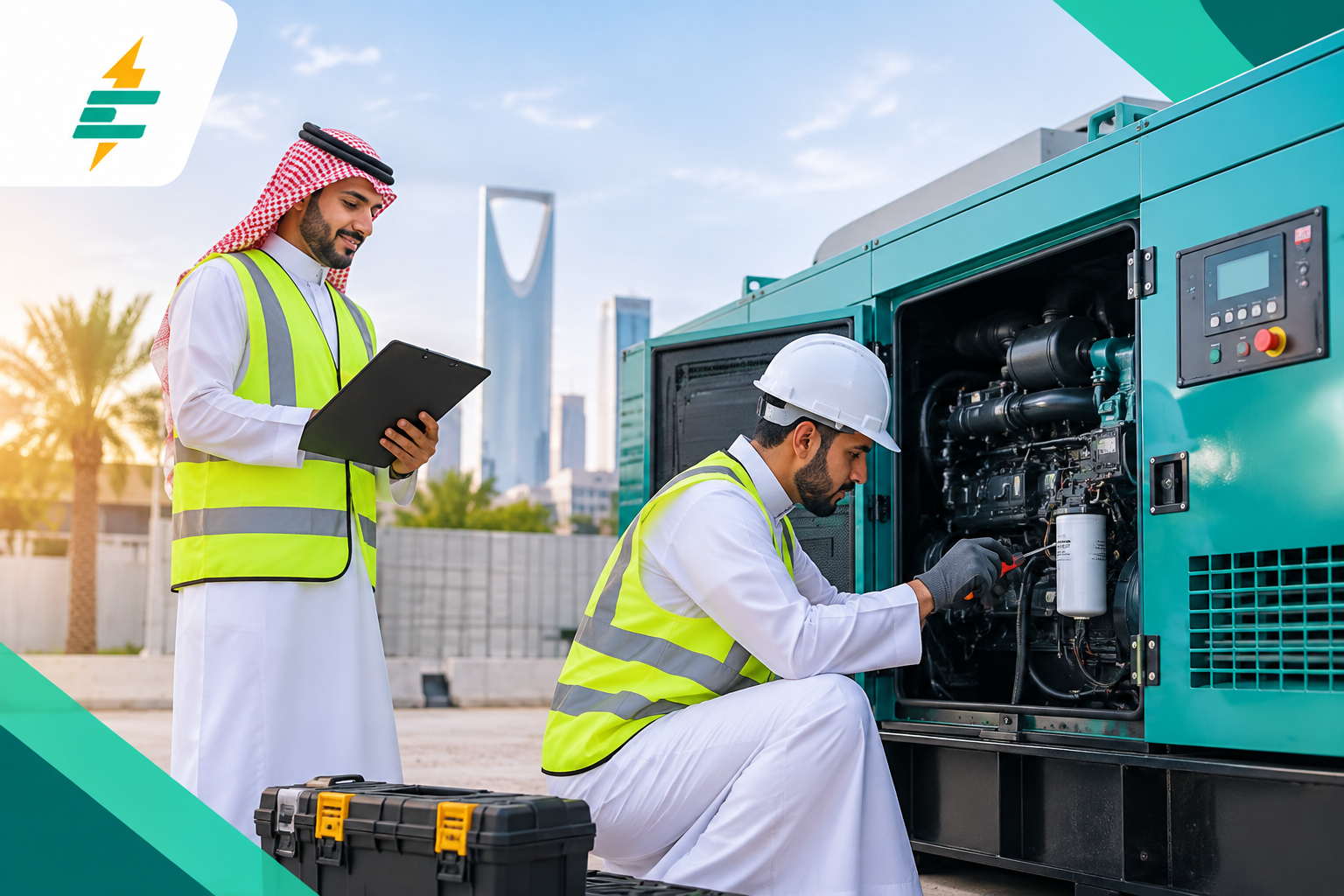

Diesel generators are among the most important power sources used by factories, commercial facilities, construction projects, and industrial sites. They provide a reliable electricity supply, especially in locations where power interruptions can disrupt daily operations or cause significant financial losses.
However, maintaining a diesel generator’s efficiency depends on more than its manufacturing quality or electrical capacity. It also requires proper maintenance, regular inspections, and an understanding of how operating conditions affect its performance.
This is where diesel generator maintenance becomes essential. It should be considered an important part of equipment management rather than a task performed only when a breakdown occurs.
A generator operating for several hours every day requires a different maintenance schedule from a standby generator that runs only during power outages. Similarly, generators used in factories, construction sites, and commercial buildings have different operating requirements.
Applying the same maintenance schedule to every generator may result in unnecessary servicing or missed maintenance requirements. Therefore, it is important to understand the relationship between operating hours, electrical load, environmental conditions, and component wear.
In this guide, we will explain how to determine diesel generator maintenance schedules based on usage, the differences between frequently operated and standby generators, essential inspection procedures, and practical maintenance schedules that help reduce unexpected breakdowns.
Why Does Diesel Generator Maintenance Differ Based on Usage?
A factory, commercial building, and construction site may use diesel generators with similar electrical capacities. However, this does not mean that all these generators require the same maintenance schedule.
The main differences are related to operating hours, electrical loads, ambient temperature, dust exposure, fuel quality, and operating frequency.
These factors determine how much stress the engine and its components experience, helping maintenance teams establish suitable inspection and servicing intervals.
1. Generator Operating Hours
Operating hours are among the most important indicators used to determine maintenance requirements.
A generator operating for 10 hours every day experiences more continuous use than a standby generator that runs for only one hour when needed.
Several components are affected by operating hours, including:
- Engine oil, which gradually loses some of its protective properties.
- Oil filters, which collect contaminants and deposits.
- Fuel filters, which are affected by diesel fuel quality.
- Air filters, which accumulate dust and airborne particles.
- Cooling systems, which regulate engine operating temperatures.
- Batteries and starting systems.
For this reason, scheduling diesel generator maintenance based on operating hours helps determine when these components should be inspected, serviced, or replaced.
2. Electrical Load Conditions
Not all operating hours have the same effect on a generator.
A generator running under a high electrical load for extended periods experiences different operating conditions compared to one operating under a moderate or low load.
For example, a factory generator may power production lines and heavy machinery continuously, while a commercial building generator may supply lighting, elevators, and air-conditioning systems under varying load conditions.
Electrical loads can affect:
- Engine operating temperature.
- Fuel consumption.
- Cooling system performance.
- Voltage and frequency stability.
- Mechanical and electrical component conditions.
Therefore, maintenance teams should not rely on operating hours alone. They should also review load records and compare actual demand with the generator’s rated capacity.
3. Environmental Operating Conditions
The surrounding environment has a direct impact on generator maintenance requirements.
A generator operating at a dusty construction site requires more frequent attention to its air filters and cooling system than a generator installed in a clean, properly ventilated room.
High ambient temperatures may also affect engine performance, lubricating oil, and cooling efficiency. Meanwhile, humidity can increase the risk of condensation inside fuel storage systems and corrosion in electrical connections.
These conditions should be considered when establishing generator maintenance intervals rather than relying exclusively on a standard calendar-based schedule.
Different Generator Types and Their Maintenance Requirements
Understanding the type of generator and its intended application is essential when developing an effective maintenance plan.
Each generator category has different operating demands and inspection priorities.
First: Industrial Generator Maintenance
Industrial generators provide electricity for factories, manufacturing facilities, and production equipment. Depending on the facility’s requirements, they may operate continuously or for extended periods.
These generators often require carefully planned maintenance because unexpected downtime can interrupt production, delay operations, and increase operating costs.
Key industrial generator maintenance tasks include:
- Checking engine oil levels and condition regularly.
- Monitoring oil pressure and engine temperature during operation.
- Inspecting the cooling system, radiator, and cooling fans.
- Checking air, fuel, and oil filters.
- Inspecting fuel and coolant hoses for leaks.
- Examining belts and mechanical connections.
- Testing generator performance under appropriate electrical loads.
- Inspecting the alternator, electrical connections, and control panel.
It is also important to maintain accurate records of operating hours, electrical loads, oil changes, and filter replacements.
These records help identify unusual performance changes and allow maintenance teams to detect developing issues before they affect production.
Facilities that depend heavily on generators should establish a preventive maintenance program coordinated with qualified technicians to minimize disruption to industrial operations.
Second: Construction Site Generator Maintenance
Construction site generators have different maintenance requirements because they operate in environments characterized by dust, frequent equipment movement, and changing working conditions.
They are commonly used to power cranes, water pumps, welding equipment, lighting systems, and various electrical tools.
These operating conditions can increase wear on specific components, particularly air filters and cooling systems.
Essential construction generator maintenance tasks include:
- Cleaning and inspecting air filters according to dust exposure.
- Checking fuel tanks to prevent contamination from dust and water.
- Checking engine oil levels before operation as recommended by the manufacturer.
- Ensuring the generator is installed on a stable and suitable surface.
- Inspecting electrical cables and protecting connections from damage.
- Cleaning cooling system openings and ventilation areas.
- Monitoring connected electrical loads to prevent overloading.
One common mistake on construction sites is postponing maintenance because of demanding project schedules or assuming that generators can operate for extended periods without inspection.
This approach may allow minor issues to develop into major failures that interrupt project activities.
Construction generators therefore require regular inspections based on their working environment, with accurate operating-hour records and appropriate maintenance intervals.
Third: Commercial Generator Maintenance
Commercial facilities such as hotels, shopping centers, hospitals, and office buildings rely on generators to maintain electricity supply during power outages.
Depending on the facility, generators may operate for different periods and support varying electrical loads.
Commercial generator maintenance should focus on operational readiness, reliability, and stable power delivery.
Important maintenance priorities include:
- Checking battery condition and starting system readiness.
- Monitoring fuel levels and fuel quality.
- Inspecting engine oil and coolant levels.
- Testing the control panel and alarm systems.
- Checking the automatic transfer switch, where installed.
- Inspecting electrical connections.
- Testing generator startup and load response.
The importance of commercial generator maintenance becomes particularly clear when a failure occurs during peak business hours or periods of high electricity demand.
Therefore, maintenance should not be limited to repairs after a problem occurs. Regular inspections are essential to ensure that the generator remains ready for operation.
Fourth: Emergency and Standby Generator Maintenance
A common misconception is that standby generators require little maintenance because they operate for only a limited number of hours.
However, infrequent operation does not eliminate maintenance requirements.
Batteries may lose charge during extended periods of inactivity. Fuel systems may develop contamination or condensation issues, and some fluids and components can deteriorate over time.
For this reason, standby generator maintenance requires special attention to ensure the equipment is ready whenever an electrical outage occurs.
Essential standby generator maintenance procedures include:
- Inspecting the battery and checking charging performance.
- Checking engine oil and coolant levels.
- Inspecting the fuel tank for contamination, water, or sediment.
- Checking air and fuel filters.
- Performing scheduled operational tests according to manufacturer recommendations.
- Testing the automatic transfer switch when available.
- Ensuring the generator returns to automatic standby mode after maintenance.
It is also important to test the generator under an appropriate load according to the approved maintenance plan rather than relying exclusively on unloaded operation.
How Many Operating Hours Can a Diesel Generator Run Before Maintenance?
One of the most common questions asked by facility managers and equipment operators is how many hours a diesel generator can operate before requiring maintenance.
There is no single answer that applies to every generator because maintenance intervals depend on engine design, model specifications, oil type, operating conditions, and manufacturer recommendations.
However, manufacturers generally establish maintenance intervals based on operating hours or elapsed time, whichever comes first.
For example, a manufacturer may recommend changing engine oil after a specific number of operating hours or after a defined period, even if the generator has not reached the operating-hour limit.
This is particularly important for standby generators that may operate for only a few hours each month.
Operating-Hour-Based Maintenance vs. Time-Based Maintenance
There are two main methods used to determine maintenance schedules.
Operating-hour-based maintenance:
This method relies on the generator’s hour meter and is particularly useful for generators that operate frequently or continuously.
Time-based maintenance:
This method depends on the time elapsed since the previous maintenance service. It is especially important for standby generators and equipment that operates infrequently.
For example, if the manufacturer recommends changing the engine oil every 250 operating hours or every 12 months, maintenance should be performed when either limit is reached first.
Both conditions must be considered rather than waiting until both are reached.
How to Calculate Generator Operating Hours
Generator operating hours can be calculated by recording the hour meter reading at the beginning and end of each operating period.
For example:
If the hour meter reads 1,250 hours at the beginning of the day and 1,260 hours at the end, the generator has operated for 10 hours.
If it continues operating at the same rate for 25 days, the total operating time will be:
10 × 25 = 250 operating hours.
This figure can then be compared with the manufacturer’s maintenance schedule to determine when the next service is due.
Maintaining accurate operating-hour records helps prevent missed maintenance intervals and supports better equipment management.
Diesel Generator Maintenance Schedule Based on Operating Hours
A structured maintenance schedule helps organize inspections, assign responsibilities, and prevent important maintenance tasks from being overlooked.
However, the following schedule is a general reference, not a universal maintenance standard. Actual intervals must be based on the specific engine model and manufacturer instructions.
| Maintenance Interval | Recommended Tasks |
| Before operation or daily, depending on usage | Check oil, coolant, fuel levels, and visible leaks |
| Approximately every 50 hours | Inspect filters, air intake system, and connections |
| Approximately every 100 hours | Review fuel system, battery, and belts according to manufacturer guidance |
| Approximately every 250 hours | Inspect or replace engine oil and filters when required by the maintenance schedule |
| Approximately every 500 hours | Perform more detailed engine, fuel system, cooling system, and electrical inspections |
| Annually | Conduct a comprehensive inspection and operational readiness test |
| According to component service life | Replace fluids and components based on manufacturer recommendations |
Actual maintenance intervals vary between generator models and may need to be shorter when equipment operates in dusty environments, high temperatures, or demanding operating conditions.
What Should Be Included in a Generator Maintenance Log?
An effective maintenance log should include more than the date of the last service.
It should contain:
- Generator identification number.
- Manufacturer and model.
- Electrical capacity.
- Current operating-hour reading.
- Date of the previous maintenance service.
- Engine oil specification.
- Filters replaced.
- Recorded faults and inspection notes.
- Name of the responsible technician.
- Next scheduled maintenance date.
These records help monitor generator condition over time and provide important information when maintenance responsibilities are transferred between teams.
When Does a Diesel Generator Need Maintenance?
Routine maintenance schedules are important, but operators should not wait for the next scheduled service if warning signs indicate a developing problem.
Several symptoms may suggest that a generator is experiencing performance issues or requires immediate inspection.
1. Difficulty Starting
If the generator requires multiple attempts to start, the problem may be related to the battery, fuel supply, injection system, or starter motor.
2. High Engine Temperature
Overheating may result from low coolant levels, a blocked radiator, cooling fan problems, or a faulty water pump.
3. Unusual Exhaust Smoke
Changes in exhaust color or excessive smoke may indicate combustion, fuel system, or air intake problems. The underlying cause should be diagnosed rather than relying on smoke color alone.
4. Increased Fuel Consumption
If fuel consumption rises significantly under similar operating conditions and electrical loads, the fuel system, air filters, and engine condition should be inspected.
5. Unusual Vibrations or Noise
Excessive vibration or unfamiliar sounds may indicate mechanical issues, loose connections, alignment problems, or mounting defects.
6. Unstable Voltage or Frequency
If electrical output becomes unstable, technicians should inspect the voltage regulator, control system, engine performance, and connected loads.
7. Repeated Alarms or Unexpected Shutdowns
Frequent control panel alarms or sudden shutdowns require reviewing fault records and identifying the underlying cause before restarting the generator.
If any of these symptoms occur, the generator should be evaluated by a qualified technician, particularly when the issue involves low oil pressure, overheating, fuel leaks, or electrical faults.
How to Determine the Right Diesel Generator Oil Change Interval
Engine oil is one of the most important elements in maintaining diesel generator performance.
It reduces friction, lubricates internal engine components, and helps protect against premature wear.
As the engine operates, oil is exposed to heat, contaminants, and combustion by-products. Over time, these conditions can gradually affect its protective properties.
For this reason, oil changes should follow the manufacturer’s recommended maintenance intervals rather than being determined by oil color alone.
Factors That Affect Engine Oil Change Intervals
Operating Hours: More operating hours increase the importance of monitoring oil service intervals.
Temperature: High ambient temperatures and demanding thermal conditions may require closer monitoring according to manufacturer recommendations.
Electrical Load: Continuous operation under heavy loads can increase engine stress and operating temperatures.
Oil Quality: The oil must meet the viscosity and performance specifications approved for the engine.
Fuel Quality: Poor combustion and contaminated fuel can contribute to oil contamination and affect its service life.
Steps for Monitoring Generator Engine Oil
- Shut down and secure the generator before inspection.
- Allow the engine to reach the appropriate measurement conditions according to the manufacturer’s instructions.
- Check the oil level using the dipstick.
- Inspect the engine for visible oil leaks.
- Review the operating-hour records.
- Replace the oil and filter when the scheduled service is due.
- Use the approved oil specification and quantity.
- Record the maintenance operation and the next service date.
Extending oil change intervals simply because the generator appears to be operating normally is not recommended. Oil deterioration may not always be visible through its external appearance.
Preventive Generator Maintenance: Why Is It Better Than Waiting for Breakdowns?
Preventive generator maintenance involves carrying out inspections and servicing procedures before failures occur.
Its purpose is to identify developing problems early, maintain equipment efficiency, and reduce the likelihood of unexpected downtime.
This differs from corrective maintenance, which is performed after a fault or breakdown has already occurred.
Preventive maintenance is particularly important for facilities that depend on generators to support daily operations.
Key Benefits of Preventive Generator Maintenance
Reducing Unexpected Breakdowns
Regular inspections help identify leaks, corrosion, battery issues, and cooling problems before they develop into major failures.
Extending Equipment Lifespan
Proper lubrication, filtration, and cooling help reduce unnecessary stress on engine components.
Improving Fuel Efficiency
Maintaining clean air and fuel systems and following recommended operating procedures can help prevent some causes of excessive fuel consumption.
Reducing Repair Costs
Addressing minor issues early is often less expensive than repairing major engine damage.
Improving Generator Readiness
Scheduled operational tests help verify that the generator is ready to operate when needed.
How to Build an Effective Preventive Maintenance Program
A practical preventive maintenance program can be developed through the following steps:
- Identify all generators installed at the facility.
- Record the technical specifications and model details of each unit.
- Review the manufacturer’s operation and maintenance manual.
- Estimate expected operating hours.
- Divide maintenance tasks into daily, weekly, monthly, and periodic activities according to manufacturer recommendations.
- Assign maintenance responsibilities to qualified personnel.
- Create digital or paper maintenance records.
- Review recurring faults and adjust the maintenance plan when necessary.
Facilities operating multiple generators should establish a separate maintenance plan for each unit because different models and operating conditions may require different service intervals.
How to Maintain a Diesel Generator After a Long Period of Inactivity
Generators that remain unused for extended periods require special inspection before being returned to service.
A generator that has been inactive is not necessarily in good operating condition. Time, humidity, and storage conditions can affect several components.
Potential problems include weak batteries, contaminated fuel, deteriorated hoses, and accumulated dust inside ventilation openings.
1. Inspect the Battery
Batteries are among the components most affected by extended periods of inactivity.
Check the charging condition, terminals, and electrical connections, and look for corrosion or physical damage.
2. Inspect the Fuel System
Check the fuel condition and storage tank for water, sediment, or signs of contamination.
Fuel filters and supply lines should also be inspected to ensure proper fuel delivery.
3. Check Engine Oil and Coolant
Verify fluid levels and ensure that the oil and coolant meet the required specifications.
Inspect the engine for leaks, contamination, or other unusual signs.
4. Inspect the Air Intake System
Dust accumulation or foreign objects entering the air intake system may affect combustion efficiency.
Inspect the air filter, ventilation openings, and intake connections.
5. Inspect Electrical Connections
Check cables, terminals, the control panel, and electrical connections for corrosion, loose fittings, or physical damage.
6. Perform an Operational Test
Once the necessary inspections have been completed and the generator is confirmed to be safe, an operational test can be performed according to the manufacturer’s procedures.
Inspection, repair, and testing activities should be carried out by qualified technicians using appropriate safety and isolation procedures.
Perkins maintenance guidance also emphasizes the importance of monitoring batteries, fuel, engine oil, and filters even when standby generators are not frequently used.
Essential Diesel Generator Components That Require Regular Maintenance
An effective maintenance plan should cover all major components that influence generator performance.
Engine Oil and Oil Filters
Engine oil reduces friction and protects internal components, while oil filters help remove contaminants from the lubrication system.
Failing to replace oil or filters at the recommended intervals may increase engine wear and reduce performance.
Fuel Filters
Fuel filters help prevent dirt, water, and other contaminants from reaching the fuel injection system.
Blocked filters can restrict fuel flow and cause starting difficulties or reduced engine performance.
Air Filters
Air filters ensure that the engine receives the air required for proper combustion.
Their inspection becomes especially important at industrial and construction sites where dust levels may be high.
Cooling System
The cooling system includes the radiator, cooling fan, water pump, hoses, and coolant.
Regular maintenance helps maintain appropriate operating temperatures and reduces the risk of overheating.
Battery and Starting System
Battery maintenance involves monitoring charge levels, terminal condition, and electrical connections.
The starter motor and charging system should also be inspected when starting problems occur.
Alternator and Control Panel
Generator maintenance is not limited to the engine. The electrical system also requires regular inspection.
This includes electrical connections, voltage regulators, sensors, protection systems, and control panel alarms.
Common Mistakes That Increase Diesel Generator Maintenance Problems
Even high-quality diesel generators can experience premature wear when operating and maintenance procedures are neglected.
Some common mistakes include:
Delaying Scheduled Maintenance: Ignoring oil changes and filter replacement intervals can increase wear and reduce engine efficiency.
Using Incorrect Engine Oil: Selecting oil based only on price without checking the required engine specifications may compromise lubrication and protection.
Ignoring Fuel Quality: Fuel contaminated with water or sediment can block filters and damage fuel injection components.
Operating Beyond Rated Capacity: Connecting loads beyond the generator’s permitted limits can lead to overheating and unstable performance.
Operating in Poorly Ventilated Areas: Inadequate ventilation may increase operating temperatures and create exhaust-related safety hazards.
Failing to Test Standby Generators: Battery or starting system problems may remain unnoticed until a power outage occurs.
Relying Only on Corrective Maintenance: Waiting for equipment to fail before arranging maintenance increases the risk of unexpected downtime and unplanned repair expenses.
How to Reduce Diesel Generator Maintenance Costs
Effective maintenance does not necessarily mean spending more money on generator servicing.
Its main purpose is to manage maintenance expenses efficiently and prevent expensive repairs caused by neglect.
Several practices can help achieve this objective.
Establish an Annual Maintenance Budget
An annual maintenance budget helps organize inspections, oil and filter purchases, and spare parts requirements instead of treating every breakdown as an unexpected emergency.
Follow Recommended Maintenance Intervals
Following the maintenance schedule helps prevent premature component damage and makes it easier to plan servicing activities.
Keep Essential Spare Parts Available
Depending on operating requirements, facilities may benefit from maintaining a supply of suitable consumable parts, including oil, fuel, and air filters.
Monitor Fuel Consumption
Recording fuel consumption alongside operating hours and electrical loads helps identify unusual changes that may indicate performance problems.
Work With Qualified Technicians
Some maintenance tasks require specialized knowledge, diagnostic equipment, and testing tools.
Working with qualified technicians improves diagnostic accuracy and reduces the likelihood of incorrect repairs.
Do You Need Specialized Diesel Generator Maintenance Services?
Some routine inspection tasks can be performed by trained operators, including checking fluid levels, observing visible leaks, and monitoring operating indicators.
However, other maintenance activities require specialized technical knowledge, particularly those involving fuel injection systems, electrical connections, voltage regulators, and load testing.
Professional maintenance support becomes especially important in the following situations:
- Repeated generator shutdowns without an obvious cause.
- Unusually high engine temperatures.
- Low engine oil pressure.
- Repeated control panel faults.
- Unstable voltage or frequency.
- The need for comprehensive generator servicing.
- Preparing a generator for continuous industrial operation.
- Restarting a generator after an extended period of inactivity.
Specialized maintenance services help assess generator condition and identify the required procedures based on operating conditions and technical specifications.
You can explore S Energy’s Generator Maintenance Services to learn more about generator maintenance solutions and technical support.
How to Choose the Right Generator for Your Facility
Effective generator maintenance begins with selecting equipment that matches the facility’s actual power requirements.
A generator with an unsuitable capacity may operate under continuous stress or fail to deliver the required performance, affecting both efficiency and maintenance needs.
Before purchasing a new generator, consider the following factors:
- Total electrical load requirements.
- The type of equipment and machinery being powered.
- Expected daily operating hours.
- Whether the generator will be used as a primary or standby power source.
- Site conditions, ambient temperature, and ventilation.
- Availability of spare parts and maintenance services.
- Future expansion of electrical demand.
If you are looking for a new generator for your facility, explore the available options for buying diesel generators and compare suitable solutions based on your operating requirements and power capacity.
If your requirements involve a temporary project or a specific operating period, generator rental services may be a suitable option after evaluating project requirements and expected usage.
The Role of S Energy in Providing Power Solutions and Generator Maintenance
Facilities that rely on diesel generators need a service provider capable of understanding their operational requirements and offering suitable solutions.
Whether the requirement involves purchasing a new generator, renting equipment, or arranging maintenance services, choosing the right power solution is essential for reliable operations.
S Energy provides generator and power-related solutions to help businesses explore suitable options based on their energy requirements and operating conditions.
By exploring S Energy’s Services, businesses can learn more about the available generator, maintenance, and power solutions.
You can also learn more about S Energy, its business activities, and the services it provides.
For inquiries about generator requirements or maintenance services, contact the S Energy team to discuss your facility’s needs.
Frequently Asked Questions About Diesel Generator Maintenance
How Often Should Diesel Generators Be Serviced?
Maintenance intervals depend on generator type, operating hours, and manufacturer recommendations. Some inspections should be performed daily or before operation, while oil changes, filter replacements, and major servicing follow specific operating-hour and time-based intervals.
Does a Standby Generator Need Maintenance Even When It Is Not Used?
Yes. Standby generators require regular inspections even when they operate infrequently. Maintenance should include checking the battery, fuel, engine oil, coolant, and electrical connections, along with scheduled operational tests.
Why Is Generator Maintenance Based on Operating Hours Important?
Operating-hour-based maintenance helps determine service requirements according to actual engine usage. It reduces the risk of exceeding oil and filter replacement intervals and makes maintenance planning more efficient.
When Should Diesel Generator Engine Oil Be Changed?
Engine oil should be replaced according to the manufacturer’s recommended schedule, considering operating hours, environmental conditions, engine load, and temperature. The operating-hour limit or time limit that comes first should be followed.
Is Industrial Generator Maintenance Different From Commercial Generator Maintenance?
Yes. Industrial generators often operate for extended periods under demanding electrical loads and may require more intensive monitoring. Commercial and standby generators generally place greater emphasis on operational readiness and reliable response during power outages.
Why Is a Diesel Generator Difficult to Start After Long Periods of Inactivity?
Starting problems may be caused by a weak battery, contaminated fuel, air in the fuel system, damaged electrical connections, or starter system faults. A complete inspection is recommended before restarting the generator.
How Can I Tell If My Generator Needs Urgent Maintenance?
Common warning signs include starting difficulties, overheating, low oil pressure, fluid leaks, unusual vibrations, repeated alarms, and unstable voltage or frequency. Critical warnings should be addressed immediately by qualified technicians.
Can a Diesel Generator Operate Continuously Without Stopping?
This depends on the generator’s design, operating classification, rated capacity, cooling system, and maintenance requirements. Always follow the manufacturer’s operating specifications rather than assuming every generator is suitable for continuous operation.
Maintain Your Generator’s Performance With the Right Maintenance Plan
Diesel generator maintenance involves much more than changing engine oil or cleaning filters. It begins with understanding operating requirements, monitoring operating hours, evaluating electrical loads, and considering the environmental conditions surrounding the equipment.
Whether you manage a factory, commercial facility, construction project, or standby power system, a well-structured maintenance plan can help reduce unexpected breakdowns, improve operating efficiency, and extend equipment lifespan.
Do not wait for a problem to occur before taking care of your generator. Start by organizing maintenance schedules, monitoring operating hours, and selecting the right technical solutions.
Explore the power solutions and services offered by S Energy. Contact the team to discuss your facility’s requirements and find suitable generator and maintenance solutions that support reliable operations and efficient power systems.