
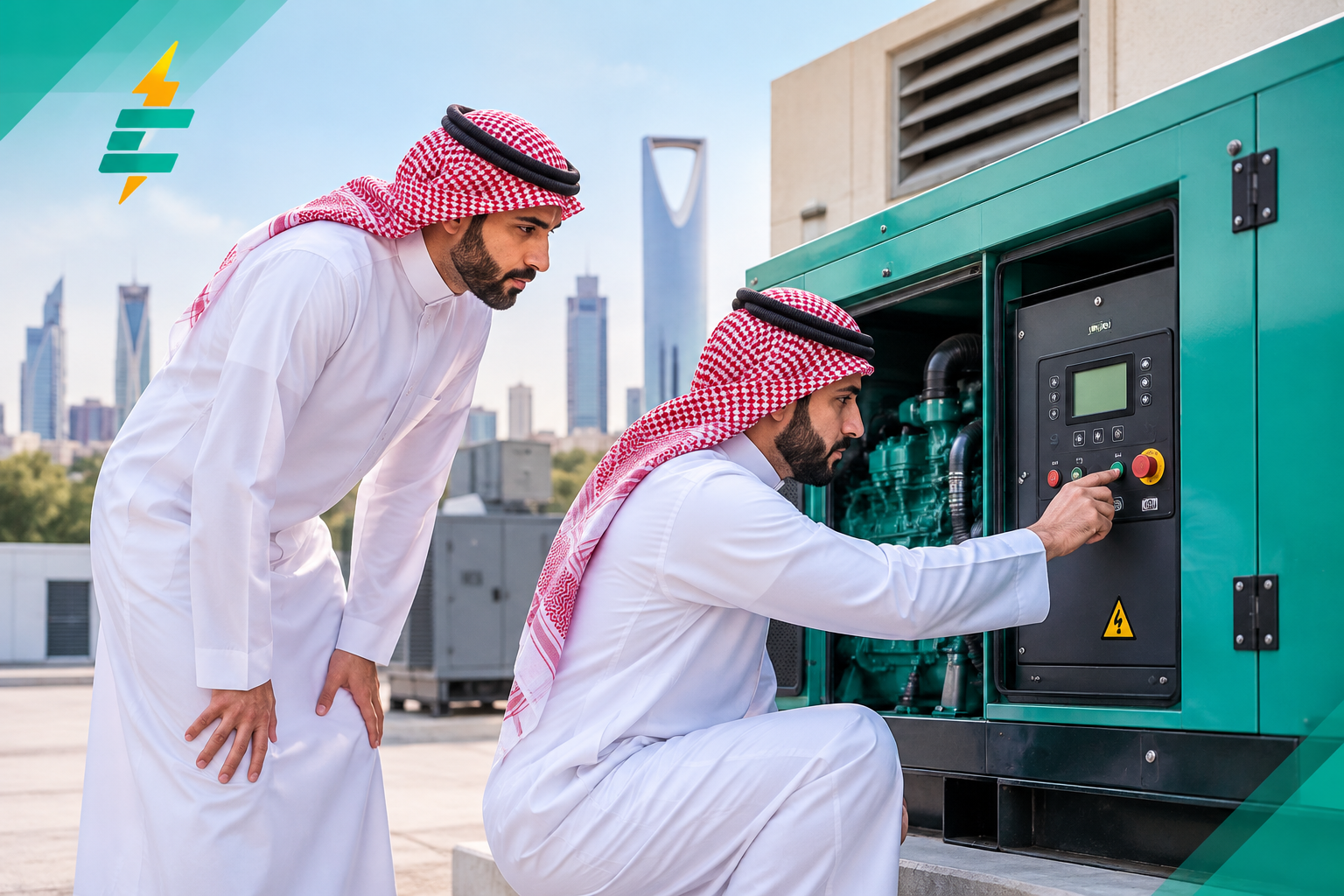

Electric generators are essential equipment for commercial facilities, industrial operations, construction sites, and residential properties. They provide a reliable source of electricity during power outages or in locations where access to a stable electrical grid is limited. However, owning a suitable generator does not automatically guarantee reliable performance. Proper operating procedures, operating-hour management, performance monitoring, and regular maintenance all play a significant role in maintaining efficiency and extending the generator’s service life.
Understanding how to operate an electric generator involves much more than knowing how to press the start button or connect electrical loads. It requires following a series of technical procedures that begin before starting the engine and continue throughout operation until the generator is safely shut down.
Incorrect operating practices can lead to overheating, excessive fuel consumption, premature component wear, and unexpected mechanical failures. On the other hand, proper generator management helps reduce operational risks, improve efficiency, and maximize the value of the equipment.
In this article, we explore the essential aspects of generator operation, including correct starting procedures, common operational mistakes, the impact of operating environments, key performance indicators, and how operating reports can help prevent equipment failures.
1. What Is Generator Operating Expertise?
Generator operating expertise refers to the ability to manage and operate an electric generator safely and efficiently while maintaining its components and minimizing the risk of unexpected failures.
This expertise involves understanding the generator’s technical specifications, connected electrical loads, maintenance requirements, and the environmental conditions affecting its operation.
For example, operating a generator at a construction site for several hours every day is different from operating a standby generator in a commercial building that only runs during power outages. Each application requires a different management approach based on operating hours, workload, and power requirements.
Generator operating expertise includes several essential areas:
- Pre-operation inspections: Checking oil levels, fuel supply, coolant, and component condition.
- Proper starting procedures: Following the manufacturer’s recommended starting sequence.
- Load management: Ensuring electrical loads remain within the generator’s rated capacity.
- Continuous monitoring: Tracking temperature, voltage, frequency, and oil pressure.
- Operating-hour management: Recording operating hours and scheduling maintenance accordingly.
- Safe shutdown procedures: Disconnecting loads and allowing the engine to cool when required.
The more organized these procedures are, the more effectively generators can be managed, reducing the likelihood of operational problems and unexpected downtime.
2. How to Operate an Electric Generator Step by Step
Although operating procedures may vary depending on the manufacturer, engine type, and control system, most electric generators follow a similar set of basic operating principles.
1. Inspect the Generator Before Starting
The first step in learning how to operate an electric generator is performing a preliminary inspection to confirm that the equipment is ready for operation.
This inspection is important even if the generator performed normally during its previous operating cycle, as problems may develop while the equipment is idle.
The inspection should include:
- Checking the engine oil level.
- Confirming that sufficient fuel is available.
- Checking the coolant level.
- Inspecting the battery condition.
- Examining hoses and electrical connections.
- Looking for oil, fuel, or coolant leaks.
- Ensuring that the generator has adequate ventilation.
The surrounding area should also be free of flammable materials and other potential safety hazards.
2. Check the Engine Oil Level
Engine oil plays a critical role in protecting internal engine components against friction and excessive wear.
Before starting the generator, check that the oil level is within the range recommended by the manufacturer.
Low oil levels can reduce lubrication efficiency, increase internal temperatures, and potentially cause serious engine damage if the generator continues operating without correction.
Adding too much oil can also create operational problems. Always maintain the recommended level rather than exceeding the manufacturer’s specifications.
3. Inspect the Fuel Supply System
When operating a diesel generator, ensure that sufficient fuel is available and that it is free from water contamination and excessive impurities.
Inspect fuel lines, connections, and filters for leaks or signs of damage.
If the generator has been inactive for an extended period, the fuel system may require additional inspection according to the manufacturer’s recommendations.
4. Check the Battery and Starting System
Many modern generators use batteries to start the engine. Therefore, checking the battery’s charge level and terminal connections is essential.
Inspect battery cables and terminals for corrosion, loose connections, or visible damage.
A weak battery can make starting difficult or prevent the generator from starting altogether.
5. Start the Engine and Monitor Its Indicators
Once the preliminary inspection is complete, start the engine according to the manufacturer’s instructions and the generator’s control system.
Allow the engine to stabilize while checking the control panel indicators.
Important parameters include:
- Engine oil pressure.
- Engine temperature.
- Output voltage.
- Electrical frequency.
- Warning indicators.
- Unusual noises or excessive vibration.
Any abnormal reading or warning signal should be investigated before connecting electrical loads.
6. Connect Electrical Loads Gradually
One common operating mistake is connecting the generator to its maximum electrical load immediately after starting.
Instead, follow the manufacturer’s recommendations regarding stabilization time and gradual load connection.
Pay particular attention to equipment that requires high starting currents, such as electric motors, pumps, and air-conditioning systems.
Gradual load application helps prevent sudden stress on the engine and alternator while maintaining stable voltage and frequency.
7. Monitor the Generator During Operation
Knowing how to operate an electric generator does not end once the engine starts. Continuous monitoring is necessary throughout the operating cycle.
Important readings should be recorded and compared with the normal operating limits specified by the manufacturer.
A clear inspection checklist is particularly useful at facilities that depend on generators for extended periods.
3. How to Operate a Home Electric Generator Safely
Home generators require special attention because they are often used during power outages and may be operated by people without professional technical experience.
Understanding how to operate a home electric generator begins with choosing an appropriate installation location.
Portable generators must be operated outdoors in well-ventilated areas, away from doors, windows, and ventilation openings. Always follow the manufacturer’s required safety distances and applicable local regulations.
Important safety procedures include:
- Reading the operating manual before use.
- Checking oil and fuel levels before starting.
- Inspecting electrical cables and connections.
- Ensuring proper grounding according to electrical safety requirements.
- Operating the generator away from enclosed spaces.
- Never connecting a generator directly to household wiring without a properly installed transfer switch.
- Avoiding electrical overloads.
- Never refueling a running or hot generator.
- Keeping the generator and electrical connections away from water.
One of the most serious risks associated with home generators is carbon monoxide poisoning.
Carbon monoxide is a toxic gas that cannot be seen or smelled. Therefore, generators must never be operated inside homes, garages, or other enclosed spaces, even when doors or windows are open.
It is also important to avoid connecting too many appliances simultaneously. Calculate the total power requirements of the appliances you intend to operate, taking into account the starting current required by certain electrical devices.
If you frequently use a generator or need to operate several high-power appliances, consult a qualified electrician to determine the appropriate generator capacity and safe connection method.
4. How to Operate a Diesel Generator: Essential Technical Considerations
Diesel generators are widely used in factories, hospitals, construction sites, and commercial buildings because they can provide power for extended periods and support a wide range of industrial applications.
However, operating a diesel generator requires particular attention to the engine, fuel system, cooling system, and lubrication system.
Before starting, check the engine oil, coolant, and fuel levels. Inspect the battery, fuel lines, and electrical connections. Ensure that the air intake and exhaust systems are functioning properly.
Once the engine starts, monitor the control panel for warning signals and abnormal readings.
Never ignore warning indicators simply because the generator appears to be running normally.
Several important considerations should be followed when operating a diesel generator:
Fuel Quality
Fuel contaminated with water or impurities can damage injectors, fuel pumps, and filters. Using fuel that meets the manufacturer’s specifications helps maintain combustion efficiency and protect the fuel system.
Engine Temperature
Avoid applying heavy electrical loads before the engine reaches the appropriate operating conditions, as recommended by the manufacturer.
Oil Pressure
Low oil pressure may indicate a lubrication problem. Any critical oil pressure warning should be addressed immediately according to the manufacturer’s safety procedures.
Cooling System Performance
High engine temperatures may result from restricted airflow, insufficient coolant, or problems within the cooling circuit.
Electrical Load Monitoring
Ensure that connected loads remain within the generator’s continuous power rating.
It is important to understand that diesel generator operating procedures are not identical for every model. They may vary depending on the engine type, control system, and whether the generator uses manual or automatic starting.
The manufacturer’s operating manual should always be treated as the primary technical reference.
5. Common Operating Mistakes That Cause Generator Failures
Many generator failures result from improper operation rather than manufacturing defects.
Understanding common operating mistakes can help prevent equipment damage, reduce repair costs, and maintain reliable power supply.
1. Starting the Generator Without an Inspection
One of the most common mistakes is assuming that a generator is ready to operate simply because it worked properly during its previous operating cycle.
Starting the engine without checking oil, fuel, coolant, or electrical connections can expose the equipment to unnecessary risks.
For example, running an engine with insufficient oil or an existing fuel leak can lead to serious mechanical problems.
2. Overloading the Generator
Every generator has a specific electrical capacity. Exceeding this capacity can place excessive stress on the engine and alternator.
Common symptoms include:
- Excessive engine temperature.
- Voltage drops.
- Unstable electrical frequency.
- Circuit breaker tripping.
- Reduced operating efficiency.
To prevent overloading, calculate actual electrical requirements and consider the starting currents of connected equipment.
Do not rely only on the generator’s nominal rating. Understand its continuous power rating and the operating conditions under which that rating applies.
3. Operating Continuously Without Monitoring
Running a generator for extended periods without checking its performance can delay the detection of developing problems.
For example, coolant levels may gradually decrease, or oil pressure may become abnormal without being noticed until engine temperature rises significantly.
This is why generator management requires a clear monitoring schedule based on operating hours and site conditions.
4. Neglecting Preventive Maintenance
Delaying oil changes, filter replacements, or cooling system inspections can allow minor problems to develop into expensive failures.
Diesel generator maintenance includes inspecting the engine, filters, fuel system, battery, electrical connections, and other components according to the manufacturer’s maintenance schedule.
Businesses can benefit from professional generator maintenance services to maintain equipment performance and receive appropriate technical support.
5. Operating the Generator in Unsuitable Conditions
Installing a generator in a poorly ventilated, excessively hot, or dusty environment can negatively affect its performance.
Obstructed ventilation openings may restrict airflow, increase operating temperatures, and reduce cooling efficiency.
6. Ignoring Warning Indicators
Some operators ignore warning signals, particularly when the generator continues running.
However, these indicators may point to low oil pressure, high engine temperature, voltage irregularities, or battery charging problems.
Warnings should always be investigated according to the operating manual. Safety protection systems should never be disabled simply to prevent the generator from shutting down.
6. How Does the Operating Environment Affect Generator Service Life?
Generator service life does not depend solely on manufacturing quality. The surrounding operating environment also plays a significant role.
Two generators of the same model may have similar operating hours, yet one may require more frequent maintenance because of environmental conditions.
This is particularly important at industrial facilities, construction sites, and locations exposed to high temperatures or excessive dust.
1. High Ambient Temperatures
High ambient temperatures affect cooling efficiency and the generator’s ability to dissipate heat produced during combustion.
When surrounding temperatures increase, the cooling system may need to work harder to maintain the engine within its permitted operating temperature range.
Therefore, ventilation and cooling systems must be suitable for the installation environment.
Always consult the manufacturer’s specifications regarding power derating under high-temperature conditions or at different operating altitudes.
2. Dust and Airborne Particles
Dust can clog air filters and accumulate on equipment components, restricting airflow and reducing cooling efficiency.
At construction sites and desert locations, air filters should be inspected more frequently according to the actual operating conditions.
Regular cleaning and suitable filtration help protect the engine and maintain reliable performance.
3. Humidity and Water Exposure
High humidity can affect electrical components and connections, particularly when adequate protection is not provided.
Water entering components that are not designed for moisture exposure can also cause insulation problems and electrical failures.
Selecting a suitable installation location and using appropriate protective equipment are essential.
4. Poor Ventilation
Generators require adequate airflow to cool the engine and maintain proper combustion conditions.
Installing a generator in a room without suitable ventilation may cause excessive temperatures and reduce operating efficiency.
Air intake and exhaust openings should be designed according to the generator’s ventilation requirements, with exhaust gases safely directed outside.
5. Load Characteristics and Operating Hours
The impact of continuous operation differs from standby operation. Similarly, industrial electrical loads behave differently from typical residential loads.
Rapidly changing electrical loads may place additional stress on the generator, especially when they include motors with high starting currents.
Furthermore, operating certain diesel generators at very low loads for extended periods may cause incomplete combustion and carbon deposits.
These conditions should be managed according to the manufacturer’s recommended loading limits.
7. Key Performance Indicators to Monitor in an Electric Generator
Generator performance monitoring is one of the most important elements of effective equipment management.
It helps operators identify developing problems before they become major failures that interrupt production or essential services.
Rather than waiting for visible problems, operators should monitor several key indicators that provide ongoing information about generator condition.
1. Engine Oil Pressure
Oil pressure is an important indicator of lubrication system performance.
Abnormally low readings may indicate insufficient oil, leakage, pump problems, or other lubrication system issues.
Always compare readings with the manufacturer’s recommended operating range.
2. Engine Temperature
Higher-than-normal engine temperatures may indicate cooling system problems, insufficient ventilation, or low coolant levels.
Recording temperature readings during operation makes it easier to identify unusual changes.
3. Electrical Output Voltage
Output voltage should remain within the acceptable range required by connected equipment.
Unstable voltage can affect sensitive electrical devices and may indicate problems with the automatic voltage regulator or load distribution.
4. Electrical Frequency
Generator frequency is directly related to engine speed and is an essential indicator of electrical stability.
Abnormal frequency variations may result from excessive loading or problems with the engine speed control system.
5. Load Percentage
Load percentage indicates how much of the generator’s available capacity is being used.
Monitoring this indicator helps determine whether the generator is operating within an appropriate range, experiencing overload, or running at very low loads for extended periods.
6. Fuel Consumption
Measuring fuel consumption against generated power and operating hours provides valuable information about generator efficiency.
If fuel consumption increases significantly without a corresponding increase in electrical load, the equipment may require inspection.
Possible causes include restricted air filters, fuel system problems, or changes in operating conditions.
7. Noise and Vibration Levels
Unusual noises or excessive vibration may indicate mechanical problems, loose mounting components, or issues involving rotating parts.
Operators should pay attention to noticeable changes in engine sound or vibration throughout the operating cycle.
8. How Can Operating Reports Help Reduce Generator Failures?
Professional generator management involves more than starting equipment and monitoring performance indicators. It also requires recording operational data and analyzing it regularly.
Operating reports provide an important record of generator history and make it easier to track performance changes over time.
They also help maintenance teams prioritize tasks and make decisions based on actual operating information.
What Information Should Be Included in an Operating Report?
A daily or periodic generator operating report should include:
- Operating date and starting and stopping times.
- Total operating hours.
- Load percentage during operation.
- Voltage and frequency readings.
- Engine temperature.
- Oil pressure.
- Fuel consumption.
- Warning indicators and recorded failures.
- Maintenance activities and technical work performed.
- Operator observations regarding unusual noise, vibration, or performance changes.
How Do Reports Help Identify Problems Before Failures Occur?
The real value of operating reports becomes clear when data is compared over different periods.
For example, if fuel consumption gradually increases while electrical loads remain stable, this may indicate a problem requiring inspection of the engine or fuel system.
If high-temperature warnings repeatedly occur at specific times of the day, the cause may be related to ambient temperature, insufficient ventilation, or cooling system efficiency.
Similarly, if operating hours increase significantly beyond planned levels, maintenance schedules may need to be reviewed and spare parts prepared in advance.
The Role of Operating Reports in Maintenance Planning
Operating records help determine maintenance requirements based on actual operating hours rather than estimates.
For example, maintenance teams can use operating-hour records to schedule oil changes, filter replacements, and component inspections.
However, time-based maintenance intervals specified by the manufacturer must also be respected, even when the generator has accumulated relatively few operating hours.
This approach improves diesel generator maintenance planning and reduces the risk of unnecessary delays or poorly scheduled maintenance activities.
9. Managing Continuous Generator Operation Without Reducing Efficiency
Facilities that depend on generators for extended periods need a structured management system to maintain reliable power supply without placing unnecessary stress on equipment.
Effective generator management includes several practices designed to improve operational reliability and minimize unexpected downtime.
1. Establish an Operating and Maintenance Schedule
Create a schedule outlining expected operating hours, inspection dates, and maintenance requirements.
Each task should have a clearly assigned responsible person.
The schedule should include daily, weekly, and periodic inspection activities based on the manufacturer’s recommendations and actual operating conditions.
2. Distribute Electrical Loads Properly
Electrical loads should be distributed according to the generator’s capacity.
Special attention should be given to equipment with high starting currents.
Facilities operating multiple generators may benefit from synchronization and load-sharing systems, where technically appropriate, to improve power distribution and operational efficiency.
3. Ensure Fuel and Spare Part Availability
Planning operational requirements in advance helps prevent generator downtime caused by fuel shortages or unavailable spare parts.
Fuel quality and storage conditions should be monitored carefully.
Facilities should also maintain essential consumables and spare parts recommended by the manufacturer.
4. Train Generator Operators
A trained operating team can significantly reduce human errors and improve equipment reliability.
Operators should understand how to operate an electric generator, respond to warning indicators, recognize early signs of failure, and perform basic inspections.
Training should also cover safety procedures, control panel operation, operating reports, and situations requiring professional technical assistance.
5. Prepare an Emergency Operating Plan
Every facility should have clear procedures for dealing with generator shutdowns, reduced power output, and critical warning signals.
The emergency plan should define responsibilities, communication procedures, and alternative power arrangements when necessary.
This is particularly important for facilities where electricity is essential to maintaining core operations.
10. When Does an Electric Generator Need Maintenance or Technical Inspection?
Even when correct operating procedures are followed, generators require periodic maintenance and technical inspections.
Certain warning signs should never be ignored or left unattended.
Difficulty Starting the Engine: This may be related to the battery, fuel system, starter motor, or operating conditions.
High Engine Temperature: This may indicate cooling system problems, restricted ventilation, or insufficient coolant.
Increased Fuel Consumption: This may result from changing electrical loads, inefficient combustion, or fuel system problems.
Low Output Voltage: This may be associated with excessive loading, voltage regulation problems, or alternator issues.
Unusual Exhaust Smoke: This may indicate combustion problems, air intake restrictions, or fuel system issues.
Fluid Leaks: Any oil, fuel, or coolant leak should be inspected and addressed before continued operation.
Unusual Noise or Vibration: These symptoms may require mechanical inspection of the engine, mounting system, or rotating components.
When these warning signs appear, the severity of the situation should be assessed immediately.
If necessary, follow the manufacturer’s safe shutdown procedures rather than continuing operation and hoping the problem will disappear.
Businesses can benefit from professional generator maintenance services to receive technical inspections and appropriate maintenance solutions.
11. How to Choose the Right Generator for Your Operating Requirements
Efficient generator operation begins with selecting the right equipment before purchasing or renting it.
Choosing a generator with insufficient capacity may result in frequent overloading, while selecting one that is significantly larger than necessary can increase purchasing and operating costs.
It may also lead to prolonged operation at very low loads.
Several factors should be evaluated before making a decision.
1. Calculate Total Electrical Load Requirements
Calculate the electrical loads that need to be supplied by the generator.
Distinguish between essential loads and equipment that can operate at different times.
Starting currents for motors, pumps, and air-conditioning systems must also be considered.
2. Identify the Intended Application
Will the generator operate continuously or serve as a standby power source?
Will it be installed at a construction site, factory, or commercial building?
The intended application affects generator type, technical specifications, cooling requirements, and power capacity.
3. Consider Site Conditions
Temperature, altitude, dust levels, and ventilation can all affect actual generator performance.
These factors should be evaluated before selecting the equipment.
4. Evaluate Operating and Maintenance Costs
The purchase price should not be the only consideration.
Fuel consumption, maintenance expenses, spare parts, and technical support costs should also be included in the overall evaluation.
Businesses looking for new equipment can explore available generator sales options and compare technical specifications according to their operational requirements.
If the generator is needed temporarily or for a specific project, generator rental services may provide a more suitable operational and financial solution.
12. The Difference Between Standby Generator Operation and Continuous Operation
Generator management depends largely on the purpose for which the equipment was designed.
Standby generators typically operate when the main electricity supply fails, while continuous-duty generators provide power for extended periods in locations without a suitable electrical grid or where an independent power source is required.
Standby Generator Operation
Standby generators must remain ready for operation, even during extended periods of inactivity.
This requires periodic inspections of the battery, fuel supply, electrical systems, and starting components.
Regular testing should be performed according to the manufacturer’s recommendations.
If the generator uses an automatic transfer switch, the system should also be inspected to ensure that it operates correctly during power interruptions.
Continuous Generator Operation
Continuous operation requires closer attention to operating hours, fuel consumption, engine temperature, and electrical loads.
A maintenance program should be based on actual operating hours, with planned shutdown periods whenever operational requirements allow.
It is also important to understand that a standby generator is not automatically suitable for continuous operation.
The generator’s power rating and permitted operating conditions must be reviewed before using it for extended periods.
13. How to Shut Down an Electric Generator Properly
Shutting down a generator is just as important as starting it.
Incorrect shutdown procedures may affect certain components, particularly when the generator has been operating under heavy electrical loads.
Although procedures vary depending on the generator type and control system, the following general principles should be considered:
- Review the manufacturer’s recommended shutdown procedure.
- Disconnect electrical loads using the appropriate procedure.
- Allow the generator to run without load for the recommended cooling period if required by the manufacturer.
- Stop the engine using the designated control system.
- Confirm that the engine has completely stopped.
- Record operating hours and any technical observations.
- Inspect the generator for leaks or unusual conditions.
- Secure the generator and prevent unauthorized operation during maintenance.
For generators equipped with automatic starting systems, proper isolation and lockout procedures must be followed before performing maintenance.
This prevents the engine from starting unexpectedly while technicians are working on the equipment.
14. Practical Tips to Improve Electric Generator Operating Efficiency
Generator performance can be improved and operating costs reduced by following several practical maintenance and management practices.
- Follow the manufacturer’s recommended maintenance schedule.
- Record operating hours consistently.
- Use fuel and lubricants that meet approved specifications.
- Keep air and fuel filters in good condition.
- Avoid exceeding the generator’s permitted operating capacity.
- Monitor voltage, frequency, temperature, and oil pressure.
- Inspect electrical connections regularly.
- Maintain adequate ventilation around the generator.
- Train operators on safety and emergency procedures.
- Maintain a record of previous failures and repairs.
- Monitor fuel consumption in relation to electrical loads.
- Consult qualified technicians when specialized inspection or repair is required.
These practices not only improve generator performance but also provide businesses with a clearer understanding of operating expenses and future maintenance requirements.
Frequently Asked Questions About How to Operate an Electric Generator
What Are the Most Important Steps in Operating an Electric Generator?
The process begins with checking oil, fuel, coolant, and battery levels, followed by inspecting connections and ventilation. Start the engine according to the manufacturer’s instructions, monitor the operating indicators, and connect electrical loads gradually.
Can an Electric Generator Run Continuously?
Yes. Generators designed for continuous operation can run for extended periods when operated within their rated specifications and maintained according to the manufacturer’s recommendations.
However, not all generators are suitable for continuous-duty applications.
What Causes a Diesel Generator to Have Starting Problems?
Starting difficulties may result from a weak battery, fuel system problems, clogged filters, or issues with the preheating system in models equipped with one.
A proper technical inspection is necessary to identify the exact cause.
How Can I Tell Whether My Electric Generator Is Operating Efficiently?
Generator efficiency can be evaluated by monitoring voltage, frequency, engine temperature, oil pressure, and fuel consumption in relation to electrical load.
Operating records and maintenance history also provide valuable information about overall equipment condition.
Does Generator Overloading Affect Its Service Life?
Yes. Repeated overloading can place excessive stress on the engine and electrical components, increase operating temperatures, and cause voltage and frequency instability.
Always operate the generator within its permitted capacity.
Why Is It Important to Record Generator Operating Hours?
Operating-hour records help determine maintenance intervals, monitor fuel consumption, evaluate performance, and maintain an accurate equipment history.
They also make it easier to plan maintenance activities and prepare spare parts in advance.
Does a Standby Generator Need to Be Tested When There Are No Power Outages?
Yes. Standby generators require periodic testing to ensure that they remain ready for operation.
Testing should follow the manufacturer’s recommendations and include checking the battery, fuel system, starting system, and automatic transfer switch when applicable.
When Should I Contact a Professional Generator Technician?
Professional assistance is recommended when the generator displays repeated warning signals, excessive engine temperature, low oil pressure, fluid leaks, or unstable voltage and frequency.
Electrical and mechanical repairs should only be performed by qualified personnel.
Get Professional Support for Efficient Generator Operation and Management
Understanding how to operate an electric generator is essential for protecting equipment, maintaining reliable power supply, and extending generator service life.
However, achieving the best performance requires a complete approach that includes selecting the right generator, following proper operating procedures, monitoring performance indicators, recording operating hours, and maintaining a preventive maintenance schedule.
Whether you are looking for a new generator for your facility, need temporary power for a project, or want to improve the performance of your existing equipment, working with an experienced service provider can help you choose the right solution.
Explore S-Energy’s services, including generator sales, generator rental, and generator maintenance.
Benefit from professional technical expertise and engineering consultations to identify the most suitable solution for your operational requirements.
Visit the official S-Energy website and contact the team today to request a consultation and receive a quotation tailored to your project needs.