
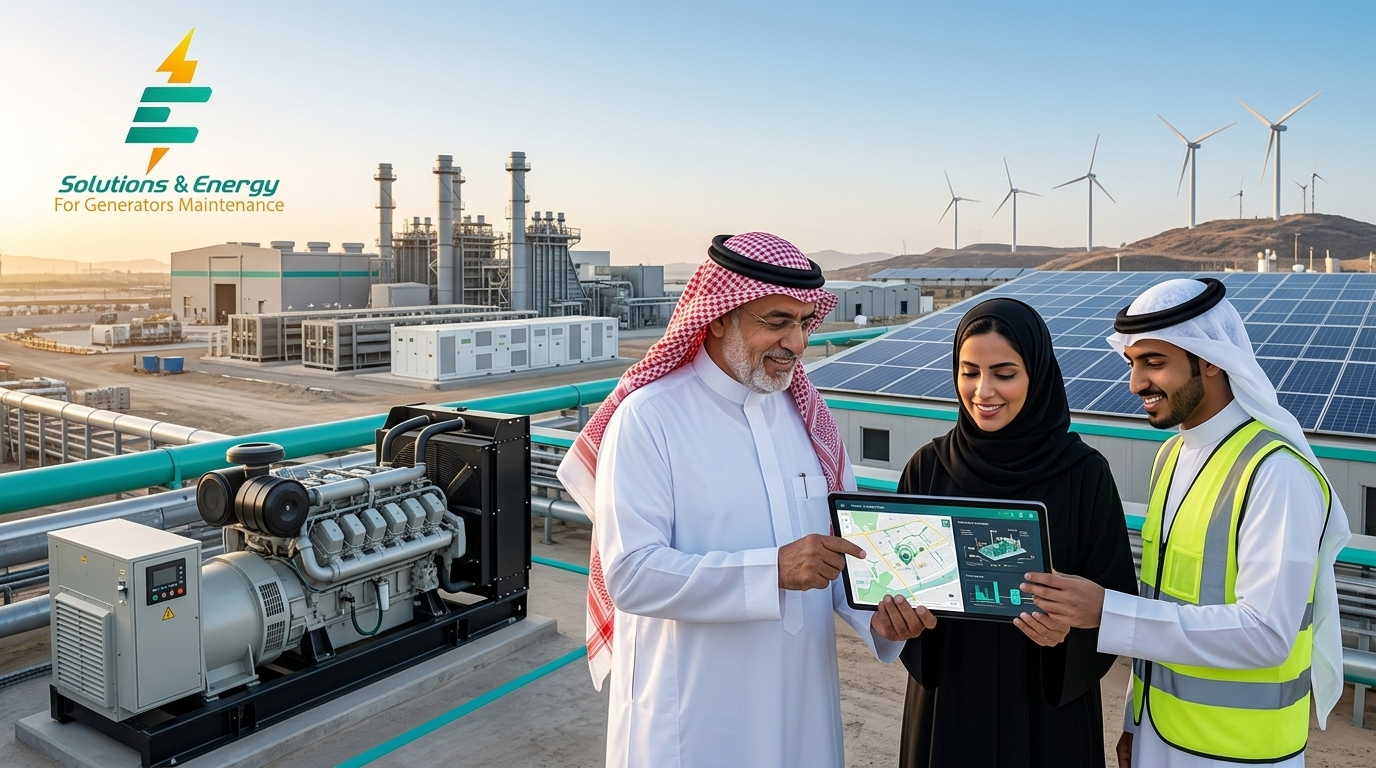

In modern facilities and industrial projects, electricity is no longer just a basic utility used to power lights and standard equipment. Rather, it has become an integral part of the daily workflow, production cycles, and overall operations. Consequently, an unexpected power outage can transform within minutes into an operational failure—negatively impacting productivity, halting production lines, compromising delicate equipment, and endangering commitments to clients.
This highlights the critical role of energy systems designed to help facilities manage their electrical needs with greater stability, especially at sites relying on continuous equipment operation. Power management goes far beyond installing a standard diesel generator; it begins with auditing actual energy demands, selecting the right energy setup, and managing ongoing operations, maintenance, and monitoring.
Energy system requirements vary significantly from one project to another. A manufacturing plant requires a drastically different setup than a construction site, and the energy profile of a commercial retail center differs from that of a distribution warehouse or short-term project. Understanding your facility’s consumption patterns and operating conditions is the essential first step toward deploying the most efficient power solution.
Why Is Backup Power Essential for Projects and Businesses?
Having a reliable backup power supply gives a facility the operational flexibility needed to navigate unexpected grid blackouts without a complete shutdown. For businesses reliant on continuous electrical equipment, production lines, or digital automation, backup energy planning is a core operational requirement.
Standby energy systems operate by providing a secondary electrical source that initiates when needed. This is typically achieved through commercial generators that can be triggered manually or automatically depending on site requirements and control architecture.
Standby power is imperative for zero-downtime environments—such as manufacturing factories, logistics warehouses, construction zones, commercial facilities, and long-hour operational sites.
Proactive energy planning allows management to transition from reacting to blackouts as emergencies to treating them as predictable, manageable events. Structured energy systems mitigate blackout impacts, keeping mission-critical processes running smoothly.
Backup Source or Temporary Solution?
Not every enterprise requires the same tier of power redundancy. One facility may need a generator capacity capable of picking up 100% of the facility’s load, while another may only need to energize critical emergency circuits during a blackout.
Conducting a thorough energy systems analysis begins with assessing electrical loads, prioritizing equipment that must remain energized, calculating total running and surge wattages, and determining the optimal solution regarding capacity, transfer mechanism, and expected runtime.
This audit prevents under- or over-specifying equipment—ensuring that every dollar invested in backup power directly supports the site’s true operational needs.
What Happens During a Power Blackout?
While a short power outage may cause minimal disruption in a small office, it can have severe financial and operational consequences in continuous-production environments.
When a blackout strikes, grid-connected equipment halts immediately. Production assembly lines, refrigeration units, control panels, lighting, and security infrastructure go offline. In many cases, sensitive machinery requires lengthy manual resets and recalibration before normal production can resume.
Standby power systems minimize the downtime gap between main grid failure and generator startup based on system automation levels.
For instance, generators integrated with an Automatic Transfer Switch (ATS) start and take over loads automatically within seconds of grid failure, whereas manual systems require manual intervention from operational staff.
This underscores the importance of power system control. Operational efficiency relies not just on having a backup generator, but on how effectively the system manages, sequences, and balances electrical loads upon transfer.
The Impact of Blackouts on Machinery and Equipment
Sudden blackouts do more than interrupt production—rapid voltage drops and unexpected shutdowns subject sensitive electrical components to wear and stress.
Furthermore, when utility power is suddenly restored, line surges can cause severe electrical overload if all heavy machinery restarts simultaneously.
Proper power system control must be designed into your electrical topology from day one—not added as an afterthought following generator installation.
How Power Outages Impact Business Productivity
Productivity depends directly on keeping operational processes running without unplanned downtime. Every minute of lost power translates into delayed output, missed production quotas, or service interruptions.
In industrial manufacturing, a line shutdown causes operational bottlenecks that cascade through subsequent processing stages. On job sites, sudden loss of electricity leaves workers and heavy equipment idle.
Right-sized power solutions eliminate wasted time caused by outages, ensuring that critical operations continue uninterrupted.
The True Cost of Downtime
The financial impact of a blackout extends far beyond unconsumed kWh; the operational losses are often far higher, including:
- Paid idle workforce hours
- Spoilage of raw materials or temperature-sensitive inventory
- Shipping delays and missed order deadlines
- Potential mechanical damage to ungracefully stopped equipment
- Labor hours spent recalibrating and restarting industrial systems
Investing in power management should be evaluated against potential downtime costs rather than initial hardware capital expense alone.
Conducting a proper energy systems analysis provides decision-makers with a clear picture of how backup power investments directly protect revenue and operational continuity.
Proven Strategies to Guarantee Power Continuity on Site
Facilities deploy several core strategies to safeguard electricity supply based on site demands, expected runtime, load profiles, and site conditions:
1. Standby Generator Systems
Installing a standby power generator is the standard method for maintaining electricity during utility failures. Generators vary widely in kVA output, fuel types, and control specifications, making precise load matching critical.
Generator-based solutions provide flexible options, whether you need to energize an entire industrial plant or support specific critical circuits.
If your facility is looking for generator sales for a new project, audit your running and surge loads prior to equipment selection rather than picking a capacity at random.
Explore tailored generator sales solutions designed for commercial and industrial facilities based on operational usage.
2. Generator Rental for Temporary Projects
Not every project requires a permanent generator installation. Temporary construction sites, outdoor events, infrastructure expansions, and seasonal field operations often only require temporary power.
For these short-term applications, generator rental provides a practical, cost-effective option—delivering reliable power for a defined project timeframe without permanent capital expenditure.
Opting for generator rentals ensures access to dependable on-site electricity without the burden of long-term asset ownership, storage, or post-project depreciation.
Even temporary power setups require detailed load planning, specifying required capacity, runtime autonomy, installation parameters, and environmental factors prior to deployment.
Discover specialized generator rental services for short-term and project-based energy demands.
3. Routine Generator Maintenance
Having a generator on-site does not automatically guarantee power security. Generators are complex mechanical systems requiring routine maintenance and testing to ensure instant startup during a blackout.
Neglecting servicing often leads to sudden equipment failure precisely when backup power is needed most.
Routine generator maintenance is an indispensable part of power availability—encompassing systematic inspections of mechanical components, fluids, electrical connections, and starter batteries.
Regular generator maintenance maintains site readiness, prevents unexpected breakdowns, and extends equipment lifecycle.
How to Select the Right Power System for Your Facility
Selecting an energy solution does not begin by asking “How big should the generator be?” It starts with a more fundamental question: “Which critical equipment must remain running during a blackout?”
Total power demand depends on multiple operating factors: total connected machinery, running wattages, starting surge currents, and load concurrency.
Categorizing Electrical Loads
Group your electrical equipment into clear categories:
- Critical Loads: Equipment that cannot experience downtime (e.g., servers, security, critical production, cold storage).
- Essential Loads: Equipment preferred to remain powered during outages.
- Deferrable Loads: Machinery that can be temporarily shed.
- Non-Essential Loads: Circuits disabled during emergency operation.
Categorizing loads establishes clear operational priorities and right-sizes required generator capacity—avoiding the unnecessary expense of sizing for non-critical loads.
Using foundational energy systems analysis builds a realistic load profile grounded in actual operational demands rather than guesswork.
Calculating Required Capacity
Accurate capacity sizing requires evaluating real operational loads rather than simply summing nameplate power ratings.
Many industrial machines demand significant inrush current (starting surge) during startup—often multiple times higher than continuous running wattage. Selecting a generator based solely on continuous wattage ratings leads to voltage drops or system trips when heavy loads start.
Analyzing load profiles and startup sequences ensures your backup generator delivers stable power under all operating conditions.
The Role of Power System Controls in Operational Continuity
As facility size, load counts, and energy sources increase, power system control becomes critical.
When managing both primary utility grid power and secondary generator sources, load transfers must be coordinated smoothly. Load shedding and power distribution must follow pre-programmed operational priorities.
System control architectures eliminate human error, streamline power transfers, and maintain system stability during grid transitions.
Advanced monitoring and control panels provide real-time performance tracking, fault diagnostics, and automated alerts to operational staff.
Operational Monitoring and Energy Management
Energy management extends beyond blackout response—continuous operational monitoring during normal utility power usage yields valuable insights.
Monitoring tracks load fluctuations, identifies power quality anomalies, and flags early warning signs before component failures occur.
Operational performance data empowers management to make informed decisions when planning facility expansions or adding heavy equipment.
Power Generation Systems and Their Role in Modern Facilities
Power generation systems encompass diverse setups designed to supply continuous or standby electricity based on site requirements.
While many commercial facilities rely on the main grid supported by standby generators, off-grid sites or continuous-duty facilities may combine generators with renewable energy systems or hybrid storage solutions.
The optimal strategy depends on site location, consumption profiles, operational objectives, and available budget.
Utilizing multiple power sources does not require overly complex setups—the priority is ensuring all generation systems are compatible, efficient, and easy to maintain.
Comparing Generator Purchase vs. Generator Rental
Facility managers frequently evaluate whether to buy or rent backup power equipment: Is it better to purchase a permanent unit or choose generator rental?
The answer depends on project duration and operational scope:
- Generator Purchase: Ideal for permanent facilities requiring multi-year, long-term standby power protection.
- Generator Rental: Highly practical for temporary job sites, seasonal demands, or projects with defined end dates.
When evaluating options, look beyond upfront acquisition or rental fees. Factor in routine maintenance, site logistics, fuel supply, storage requirements, and future capacity scaling.
Comparing energy systems against total cost of ownership (TCOO) ensures your decision aligns with actual operational demands.
When Does Your Facility Need Generator Maintenance?
Generators require structured preventive maintenance schedules based on operating hours, environmental conditions, and manufacturer guidelines.
For facilities heavily reliant on emergency standby power, scheduled maintenance is non-negotiable for operational continuity.
Standard servicing includes inspecting core engine components, testing oil and coolant levels, checking battery charge and connections, and replacing filters.
Proactive maintenance identifies mechanical wear early—preventing catastrophic failure when emergency power is needed. Servicing should be scheduled proactively rather than initiated after a breakdown occurs.
Managing Power Continuity for Large-Scale Facilities
As facility scale expands, energy management demands rigorous engineering design over improvised setups.
Manufacturing plants, logistics hubs, commercial complexes, and major construction projects feature high load counts operating simultaneously, increasing operational complexity.
For large-scale projects, energy systems engineering begins with detailed site assessments, comprehensive load audits, critical load isolation, and contingency planning.
Complex setups often utilize multi-generator paralleling configurations, automated load-shedding sequences, and staged power restoration protocols.
In large-scale operations, standby energy planning forms an integral part of broader MEP (Mechanical, Electrical, Plumbing) engineering design.
Key Considerations for Installing Backup Power Systems
Prior to deploying a standby power setup, review the following essential engineering parameters:
- Required continuous and surge kW/kVA capacity
- Load profiles and starting characteristics
- Expected operating runtime autonomy
- Site placement, pad requirements, and spatial footprint
- Maintenance access and clearance
- Site ventilation and exhaust routing
- Acoustic insulation and local decibel noise limits
- Fire, life, safety, and regulatory compliance
- Transfer switch automation and power control integration
- Long-term spare parts availability and technical support
- Future facility expansion requirements
Addressing these variables guarantees a robust, compliant, and durable power installation.
Matching control configurations to site workflow is vital, especially for multi-source, multi-load environments.
Common Pitfalls in Power System Planning
Despite the importance of backup power, organizations often make avoidable planning errors:
- Guessing Required Capacity: Specifying an undersized generator leads to system trips during outages, while severely oversizing drives up fuel consumption and acquisition costs unnecessarily.
- Overlooking Motor Starting Loads: Failing to account for initial inrush currents results in severe voltage dips when heavy motors start.
- Neglecting Routine Servicing: Installing equipment without a maintenance contract leads to battery failure, bad fuel, or engine start failure during actual grid outages. Routine generator maintenance is an integral part of the solution itself.
- Failing to Prioritize Loads: Attempting to power 100% of non-essential loads inflates capital costs. Isolating mission-critical loads yields a far more cost-effective setup.
- Ignoring Future Expansion: Sizing strictly for current demand without headroom prevents easy scaling when the facility adds new production lines.
Step-by-Step Guide to Building a Power Continuity Plan
Build a reliable energy continuity framework by following these structured steps:
1
Conduct an Electrical Load Audit
Catalog all electrical equipment
1.Conduct an Electrical Load Audit:Catalog all electrical equipment.
Document every powered device, recording nameplate wattages, operating voltages, and starting current demands.
2
Identify Critical Operations
Isolate mission-critical circuits
2.Identify Critical Operations:Isolate mission-critical circuits.
Categorize circuits into essential (must run), secondary, and deferrable loads to establish transfer priorities.
3
Establish Required Runtime
Calculate required autonomy
3.Establish Required Runtime:Calculate required autonomy.
Determine required fuel autonomy—whether the site needs backup power for minutes, hours, or extended days of operation.
4
Evaluate Purchase vs. Rental Options
Match financial and operational models
4.Evaluate Purchase vs. Rental Options:Match financial and operational models.
Compare permanent equipment purchase against generator rental options based on project lifespan.
5
Design Power Control Architecture
Integrate Automatic Transfer Switches (ATS)
5.Design Power Control Architecture:Integrate Automatic Transfer Switches (ATS).
Implement transfer controls and load management panels to manage power switching automatically.
6
Establish a Maintenance Program
Schedule periodic inspections
6.Establish a Maintenance Program:Schedule periodic inspections.
Set up routine servicing schedules, fluid inspections, and battery checks with qualified service engineers.
7
Test the Emergency System Periodically
Conduct routine load-bank testing
7.Test the Emergency System Periodically:Conduct routine load-bank testing.
Simulate main grid failures regularly to verify automated system response and generator readiness.
Tailoring Energy Solutions to Your Industry
No single energy setup fits every application. A 24/7 continuous manufacturing plant requires a different strategy than a retail outlet, and a temporary job site demands different logistics than a permanent medical facility.
Power engineering begins with your operational requirements rather than pre-packaged products.
While one facility may require generator sales for permanent high-capacity standby power, another may need generator rental for a short-term contract. Existing facilities with installed units may only need generator repair or preventive servicing to restore performance.
Comprehensive energy solutions combine technical analysis, equipment selection, site installation, automation, and ongoing maintenance.
Generator Repair vs. Complete Replacement
When an existing generator encounters faults, full system replacement is not always necessary.
Many issues involve specific components that can be inspected and repaired cost-effectively compared to purchasing new equipment. However, if an aging unit experiences repeated major mechanical failures or no longer meets expanded site capacity, replacement or adding a parallel unit may be recommended.
Diagnostic evaluations by technical specialists clarify whether repair or replacement offers the best return on investment.
Professional generator repair and servicing extend equipment operational lifespan when structural integrity remains sound.
Re-evaluating electrical loads every few years ensures your backup system keeps pace with facility growth.
The Importance of Consulting Power System Specialists
While selecting a generator appears straightforward, matching generator capacity to complex load profiles, surge dynamics, and control automation requires specialized expertise.
Application engineers assist in conducting site load audits, calculating transient surge demands, specifying control panels, and designing routine maintenance programs.
Professional consultation bridges the gap between theoretical calculations and real-world operational performance.
How Proactive Planning Protects Your Business
Proactive energy planning equips your business to handle grid blackouts without operational disruption.
Establishing a standby power continuity plan—supported by automated transfer controls, regular maintenance, and prioritized load management—turns potential emergencies into routine, managed events.
Grid failures may be unpredictable, but your facility’s response doesn’t have to be.
Frequently Asked Questions About Energy Systems
Does every commercial facility require a standby generator?
Not always. The requirement depends on your facility’s operational sensitivity, the cost of downtime, potential safety risks, and the criticality of continuously powered equipment.
Is purchasing a generator better than renting?
It depends on project duration and usage goals. Long-term, permanent facilities benefit from purchasing, whereas short-term or temporary job sites benefit from generator rentals.
How do I accurately determine required generator capacity?
Audit all connected electrical loads, identify concurrent operating equipment, factor in motor starting currents, and consult with a power systems engineer.
Is maintenance necessary if the generator is rarely used?
Yes. Standby generators left idle suffer from battery discharge, fuel degradation, and component corrosion. Regular generator maintenance ensures instant startup when an outage occurs.
Why is power system control important?
Control systems manage automatic source switching, protect equipment from phase drops, and handle load shedding—preventing generator overloads during emergency transfers.
Build Your Power Continuity Strategy Today
Securing continuous power for your enterprise relies on understanding your exact operational needs and deploying a tailored energy setup.
Whether your site requires buying a new standby generator, securing a generator rental for a temporary project, retrofitting control panels, performing generator repair, or setting up routine generator maintenance, success depends on sound engineering and proactive planning.
To explore tailored energy solutions for your facility, visit our homepage to view our services, or visit about us to learn more about our engineering team.
Discover our full scope of our services—including generator sales, generator rentals, and specialized generator maintenance—and contact us today to consult with our application engineers and request a custom quotation tailored to your operational requirements.