
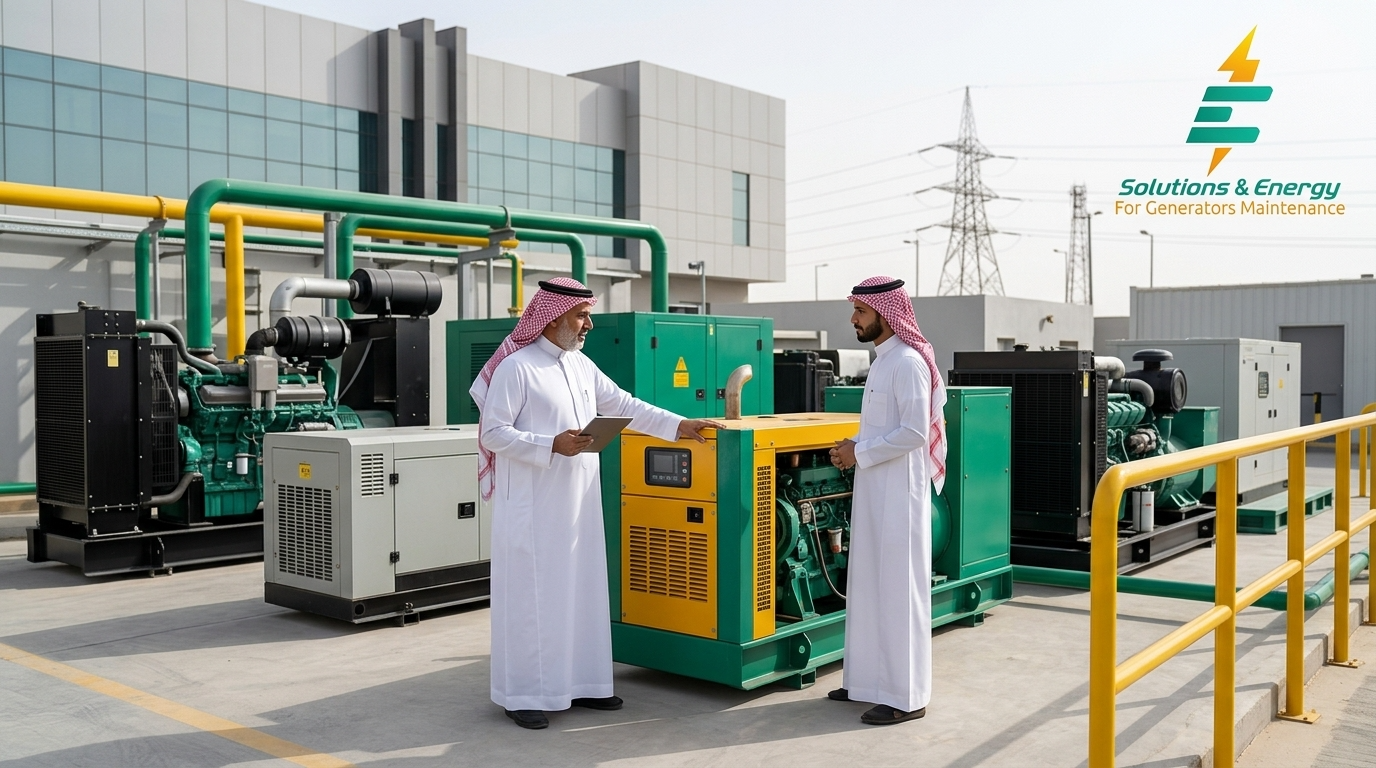

Choosing the Right Generator begins with a crucial question: How do you determine the exact power capacity (kVA/kW) required for your facility? Should you purchase a new unit or opt for a mobile rental fleet? Is a commercial retail generator configured the same way as an industrial manufacturing plant or civil construction site?
Selecting the right generator requires careful consideration of your facility’s power requirements, operating environment, load profile, and duration of use to ensure reliable and efficient performance.
Why Every Industry Requires a Custom Power Configuration
A generic generator setup rarely delivers optimal performance across different commercial sectors. Electrical demand profiles vary significantly depending on the nature of connected loads:
- Retail Stores & Commercial Offices: Require stable power primarily for LED lighting, HVAC compressor units, POS systems, server racks, and refrigeration units.
- Manufacturing Plants & Industrial Sites: Demand high transient capacity to handle heavy electric motors, air compressors, industrial pumps, and automated production machinery operating simultaneously.
- Civil Construction Sites: Need mobile, ruggedized power that can be relocated easily across changing project phases.
Selecting an industrial power system requires evaluating load dynamics, duty cycles (Standby vs. Prime Power), and site environmental factors.
Technical Sizing: Calculating Required Generator Capacity (kW vs. kVA)
The primary technical metrics when evaluating generator capacity are Kilowatts (kW) (real power) and Kilovolt-Amperes (kVA) (apparent power). They are linked by the circuit’s Power Factor (PF), typically rated at 0.8 for standard three-phase industrial generators.
To calculate power demand:
kVA=Power Factor (0.8)kW
Motor Inrush Currents & Starting Surge
When electric motors start up, they draw an initial inrush current 3 to 6 times higher than their rated continuous operating current. Failing to account for this starting surge results in severe voltage drops, tripping breakers, or engine stalling.
Operating Margin Allocation
An industrial generator should operate between 50% and 80% of its prime load rating. Running a generator continuously at full capacity reduces engine lifespan, whereas running it below 30% capacity causes fuel wet stacking (unburned fuel buildup in the exhaust system).
Sector-Specific Generator Selection Strategy
1. Commercial Outlets & Restaurants
Categorize facility loads into three priorities to optimize generator sizing:
- Critical Loads: Refrigeration units, IT servers, security systems, and emergency lighting.
- Important Loads: General HVAC cooling and main display lighting.
- Non-Essential Loads: Decorative lighting or secondary heating units shed during power outages.
2. Manufacturing & Heavy Industry
Industrial sizing requires assessing motor starting sequences. Staggering high-horsepower motor activations rather than starting all equipment at once reduces peak kVA demand and avoids needing an oversized generator.
3. Construction & Infrastructure
Civil engineering projects benefit from flexible mobile rental fleets. For short-term or multi-stage civil works, deploying a mobile unit via Generator Rental Services eliminates long-term storage and asset depreciation costs.
Purchasing vs. Renting: Financial Framework (CapEx vs. OpEx)
Capital Purchasing (CapEx)
Outright purchase is recommended for long-term or permanent facilities where standby power is an essential component of asset protection and business continuity. Review options via Generators for Sale.
Equipment Leasing (OpEx)
Renting provides an adaptable option for temporary projects, emergency grid repairs, or seasonal load increases. Lease contracts include routine field servicing and eliminate capital depreciation liabilities.
Common Sizing Pitfalls to Avoid
- Sizing Based on Floor Area Alone: Square footage does not reflect electrical load density or motor starting spikes.
- Ignoring Starting Surge Currents: Sizing equipment based strictly on running nameplate kW causes system shutdown during high-load startups.
- Purchasing strictly on initial purchase price: Units with low purchase prices but poor fuel efficiency cost significantly more over their operational lifespan (TCO).
- Neglecting Planned Preventative Maintenance: Operating power systems without scheduled oil changes, filter replacements, and load-bank testing leads to equipment failure. Maintain operational readiness through structured Generator Maintenance Services.
Data Checklist Before Requesting a Technical Quotation
Preparing key project parameters speeds up technical scoping and ensures accurate pricing:
- Site Location & Installation Conditions: Ambient temperature, altitude, indoor enclosure vs. outdoor canopy.
- Electrical Load Schedule: Total continuous kW/kVA requirements and list of major electric motors.
- Duty Profile: Standby emergency backup, Prime power, or Continuous off-grid operation.
- Fuel & Noise Requirements: Desired fuel autonomy (tank size) and sound attenuation level (dBA rating at 7 meters).
- Grid Integration Needs: Requirement for Automatic Transfer Switches (ATS) or Automatic Mains Failure (AMF) control modules.
Consult with S-Energy Power Systems Engineers
Selecting an industrial power system requires evaluating load schedules, mechanical specifications, fuel systems, and control integration. S-Energy delivers complete engineering solutions spanning procurement, temporary power fleets, installation, and lifecycle field support.
Explore company background, technical capabilities, and engineering track record on the About Us page, or visit our primary portal at S-Energy Solutions & Power.
To schedule a site audit or consult with a technical engineer regarding your project’s power needs, reach out directly via Contact Us.
Where would you like to go next?
Calculate motor-starting surge current for industrial loads
Review ISO 8528 generator rating standards (Standby, Prime, Continuous)
Download a comprehensive power site audit checklist