
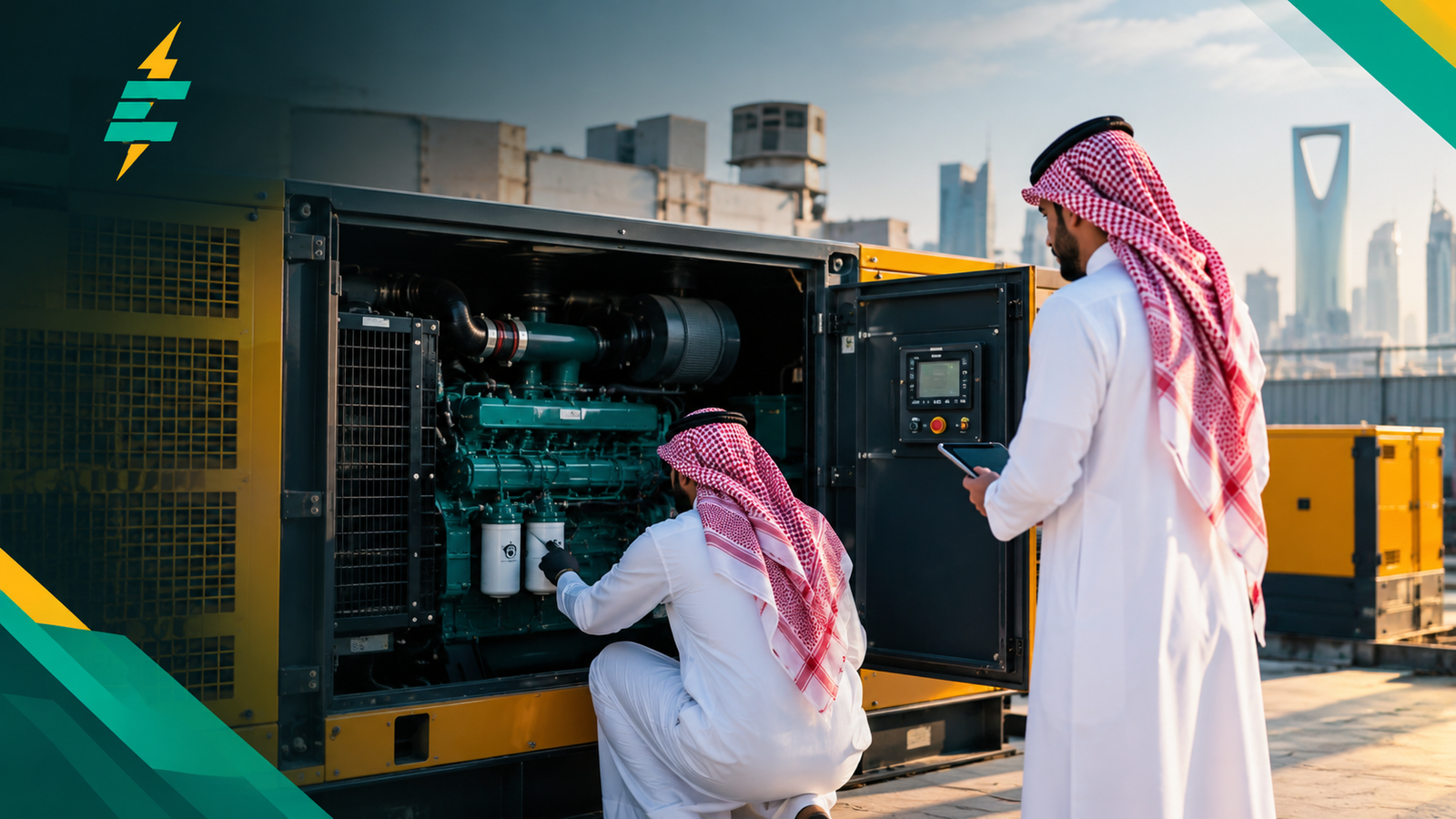

Diesel generators are essential for ensuring a reliable power supply in commercial facilities, factories, construction sites, and homes that require backup electricity. However, like any mechanical equipment, generators can develop problems that affect their efficiency or prevent them from operating when power is needed most. This is why understanding diesel generator faults, recognizing the warning signs, and knowing how to address them early are important steps toward preventing major breakdowns and costly repairs.
You may notice that your generator fails to start, starts normally but shuts down after a few minutes, or struggles to power equipment as effectively as before. You might also observe an increase in operating temperature or unusual smoke coming from the exhaust. These symptoms do not necessarily mean that the generator needs to be replaced. The cause could be something relatively simple, such as a clogged fuel filter or a weak battery, or a more complex issue that requires professional attention.
In this article, we will explore the most common generator faults, their potential causes, basic troubleshooting methods, and the importance of preventive maintenance. We will also explain which initial checks you can perform safely and when you should call a qualified technician to avoid equipment damage and mechanical or electrical hazards.
1. The Most Common Electrical Generator Faults and Their Causes
Generator faults vary depending on the generator type, operating hours, connected electrical loads, and maintenance history. Nevertheless, several problems frequently occur in diesel generators, and many can be prevented or addressed through regular inspections and proper diagnosis.
1.1. The Generator Fails to Start
One of the most frustrating problems is attempting to start a generator and receiving no response, especially during a power outage or at a site that depends on a continuous electricity supply. The causes of a generator failing to start may involve the starting system, fuel supply, or protective control settings.
Common causes include:
- A weak or discharged battery: The generator needs sufficient electrical power to operate the starter motor. If the battery is weak, you may hear repeated clicking without the engine starting.
- A faulty starter motor: Even if the battery is functioning correctly, the starter motor may fail because of an electrical or mechanical problem.
- Insufficient fuel: The diesel level may be too low, or fuel may not reach the engine because of a clogged filter.
- Air in the fuel system: Air can interrupt the proper flow of fuel to the injection system, particularly after the tank runs empty or certain maintenance procedures are performed.
- An activated protection system: The control unit may prevent startup because of an alarm or an abnormal sensor reading.
Start by checking the fuel level, control panel indicators, and visible battery condition. Also, confirm that the generator’s operating switch is in the correct position. If an error message appears, record the fault code before attempting another startup.
If the engine cranks but does not start, the problem may involve fuel delivery, the injection system, or operating conditions. Avoid repeated, prolonged starting attempts because they can drain the battery and put additional strain on the starter motor.
1.2. The Generator Shuts Down Unexpectedly
Unexpected shutdowns require careful diagnosis because the cause may involve the engine itself, the cooling system, the fuel supply, or the connected electrical load.
Common causes of generator shutdown include low fuel levels, clogged diesel filters, excessive operating temperatures, low oil pressure, and electrical loads that exceed the generator’s capacity.
In some cases, the generator shuts down because its control unit detects a fault that requires the engine to stop. This response is not necessarily a malfunction. Instead, it may be a protective measure designed to prevent more expensive damage.
To investigate the problem, review the alarm history on the control panel. Once the generator has been safely stopped and allowed to cool, check the fuel, oil, and coolant levels.
Never attempt to bypass the protection system or disable pressure and temperature sensors simply to keep the generator running.
If the shutdown continues without an obvious explanation, arrange a professional inspection of the fuel system, cooling system, sensors, and control unit instead of repeatedly restarting the generator.
1.3. Generator Overheating
Overheating can directly affect engine life and operating efficiency. The problem may initially appear as a gradual increase in temperature, eventually triggering an automatic shutdown if it remains unresolved.
Common causes of generator overheating include:
- Low coolant levels or leaks in the cooling circuit.
- A radiator blocked by dust or debris.
- A malfunctioning cooling fan or reduced fan efficiency.
- A faulty thermostat or coolant pump.
- Operating the generator under excessive electrical load.
- Poor airflow around the generator, particularly in enclosed or poorly ventilated rooms.
At industrial and construction sites, dust can accumulate rapidly around ventilation openings and radiators, reducing the system’s ability to dissipate heat. Therefore, checking the coolant level alone is not enough. The entire cooling system must be inspected.
If the temperature rises abnormally, stop the generator according to the manufacturer’s instructions and allow it to cool. Never open the radiator cap while the engine is hot, as pressurized coolant can escape and cause serious burns.
A qualified technician can inspect for leaks, check the fan and coolant pump, examine the thermostat, and verify that the electrical load is appropriate for the generator’s capacity.
1.4. Reduced Generator Performance
A generator may continue running normally but fail to supply the power required by connected equipment. You may notice low voltage, unstable frequency, or inconsistent electricity when additional loads are connected.
Several factors can cause reduced generator performance, including:
- A clogged air filter that restricts the airflow required for combustion.
- A blocked fuel filter or insufficient diesel supply.
- Problems with fuel injectors or the injection system.
- Electrical loads that exceed the generator’s rated capacity.
- A malfunctioning automatic voltage regulator (AVR).
- Loose electrical connections or deteriorating generator components.
It is important to distinguish between reduced engine performance and reduced electrical output. If the engine loses speed when equipment starts operating, the issue may involve fuel delivery, excessive loading, or the engine speed control system.
However, if engine speed remains stable while voltage readings are abnormal, the excitation system, voltage regulator, and electrical connections may require inspection.
Suitable measuring instruments can help identify the actual problem instead of replacing components unnecessarily. It is also important to remember that some equipment, including electric motors and pumps, requires a high starting current. This can cause a noticeable voltage drop if the generator is not appropriately sized.
If you are planning to purchase a new generator or replace one that no longer meets your requirements, explore electrical generator sales services to learn about generator options suited to your application and power requirements.
1.5. Black, White, or Blue Smoke from the Exhaust
Exhaust smoke color can provide useful clues when diagnosing diesel generator faults. However, color alone cannot confirm which component has failed. It must be considered alongside operating conditions, engine temperature, and fuel consumption.
Black smoke: This commonly indicates incomplete fuel combustion and may be associated with a clogged air filter, excessive loading, or a fuel injection problem. If black smoke appears when several machines are connected, the generator may be overloaded or struggling to respond to the demand.
White smoke: White smoke may appear briefly during cold starts, particularly in low temperatures. However, if it continues after the engine reaches operating temperature, it may indicate incomplete fuel combustion, injection problems, or insufficient compression. Thick white smoke accompanied by coolant loss may indicate an internal engine problem that requires urgent inspection.
Blue smoke: Blue smoke is commonly associated with engine oil entering the combustion chamber. Possible causes include worn internal components, problems with the crankcase ventilation system, or an oil level that exceeds the manufacturer’s specified limit.
When unusual smoke appears, observe when it starts, how long it continues, and whether it is accompanied by overheating, power loss, or excessive oil consumption. These details help technicians identify the cause more efficiently.
Persistent smoke or unusual exhaust odors should never be ignored, especially in enclosed spaces, because diesel exhaust contains hazardous gases.
1.6. Oil, Fuel, or Coolant Leaks
Leaks may initially appear minor, but they can lead to serious faults if left untreated. An oil leak can reduce lubrication, a fuel leak creates safety hazards, and a coolant leak can cause the engine to overheat.
Leaks commonly occur around hoses, connections, seals, and filters. They may result from damaged gaskets, loose fittings, or hoses that have deteriorated over time.
For an initial inspection, check the ground beneath the generator and the surrounding area for unusual stains. Always ensure the generator is stopped before approaching moving or hot components.
Never touch leaking fluids with your bare hands or attempt to locate a pressurized fuel leak while the engine is running. If you discover a significant fuel leak, stop the generator safely, follow the applicable safety procedures, eliminate ignition sources, and contact a qualified technician.
Regular inspections of hoses and connections are an essential part of preventive maintenance because they help identify deterioration before it causes a shutdown or engine damage.
1.7. Unusual Noises or Excessive Vibration
Generators naturally produce some noise during operation. However, a change in sound or the appearance of new vibrations may indicate a problem that needs investigation.
Metallic noises or repeated knocking may indicate an internal mechanical fault. Excessive vibration may be associated with loose mounting points, unbalanced rotating components, or a problem with the coupling between the engine and the generator.
A high-pitched squealing sound may indicate a belt problem, while unusual noises can also originate from the cooling or exhaust systems.
If a new noise appears suddenly, do not continue operating the generator under a heavy load to test the problem. Stop it if it is safe to do so, and record the conditions under which the noise occurred, including engine speed, load level, and operating duration.
This information can help identify the source of the fault and reduce diagnostic time. Continuing to operate a generator with severe metallic knocking or excessive vibration may cause further damage to bearings, shafts, or mounting components.
1.8. Weak Battery Charging or Starting System Failure
A diesel generator depends on a properly functioning battery and starting circuit, even when it has an automatic starting system designed to activate during a power outage.
The problem may appear as slow engine cranking, a low-voltage alarm, or a failure to start automatically when the main electricity supply is interrupted.
Possible causes include an aging battery, corroded battery terminals, a faulty charging system, damaged electrical connections, or incorrect automatic-start settings.
The battery should be inspected regularly, and its charge and connections should be checked according to the manufacturer’s instructions. The charging system and automatic-start function should also be tested as part of the maintenance program.
Batteries must be handled carefully. Incorrectly connecting or disconnecting them can cause electrical sparks or damage electronic components.
If the generator starts manually but fails to start automatically during a power outage, the issue may involve the control unit, the main power monitoring sensor, or the starting circuit rather than the engine itself.
2. Common Diesel Generator Faults and How to Diagnose Them
Accurate diagnosis requires understanding the relationship between symptoms and their potential causes rather than assuming that every problem requires a specific component to be replaced. In many cases, a systematic inspection helps identify the underlying issue more quickly.
When dealing with diesel generator faults, it is useful to divide the inspection into the main systems: fuel, lubrication, cooling, battery, electrical controls, and power generation.
Fuel System Problems
A diesel engine depends on fuel being delivered at the correct pressure and timing. Clogged filters, water-contaminated fuel, or air in the system can cause starting difficulties, engine shutdowns, or reduced power under load.
Begin by checking the fuel level, filter replacement schedule, and maintenance records. If the problem occurs repeatedly after refueling, inspect the fuel quality and check for possible water or contamination.
Fuel injection pumps, injectors, and fuel pressure should be examined by a qualified technician using appropriate equipment. These components operate under high pressure and require specialized procedures.
Lubrication System Problems
Engine oil reduces friction between moving components, helps dissipate heat, and protects internal parts against wear. Low oil levels, unsuitable oil, or delayed oil changes can compromise lubrication.
If a low oil pressure alarm appears, take it seriously. Stop the generator according to the operating instructions and check the oil level once the engine has stopped and the prescribed procedure can be followed safely.
If the oil level is normal but the warning continues, the cause may involve the oil pump, filter, pressure sensor, or other components of the lubrication circuit.
Do not rely on adding oil alone to eliminate the warning. Continued operation with insufficient oil pressure can cause expensive internal engine damage.
Cooling System Problems
The cooling system inspection should include the coolant level, hoses, radiator cleanliness, fan operation, and coolant pump condition. You should also ensure that the generator’s installation allows adequate airflow and proper heat removal.
Some cooling problems appear only under heavy loads or after extended operating periods. Therefore, it is important to record the conditions in which the issue occurs rather than inspecting the generator only when it is cold and unloaded.
Electrical Power Generation Problems
The engine may be functioning correctly while the generator produces unstable voltage or frequency. Possible causes include a faulty voltage regulator, loose connections, damaged windings, excitation system problems, or unstable engine speed.
This type of fault requires voltage and frequency measurements using suitable instruments. The results should be compared with the specifications provided by the manufacturer.
Connections, circuit breakers, and protection systems should also be inspected by a qualified electrical technician.
Opening electrical components or taking measurements during operation without proper training and protective equipment is unsafe. Generators can produce dangerous voltages even when their output is not functioning normally.
3. Electrical Generator Faults and How to Repair Them
Repairing electrical generator faults involves more than replacing damaged components. The process begins by identifying the underlying cause of the problem. A fault may return after a component is replaced if the original cause, such as restricted airflow, excessive loading, or poor ventilation, remains unresolved.
The following steps provide a practical framework for diagnosing and repairing generator problems.
Step 1: Record the Symptoms and Alarms
Before attempting any repair, identify exactly what is happening.
Does the generator fail to start? Does it start and then shut down? Is the temperature rising? Is there unusual smoke? Or does the engine run while the electrical output remains unstable?
Review the control unit’s display and record any fault codes, including when they appeared and the operating conditions at the time.
These details can help identify the system that needs inspection, although an alarm does not always mean that the associated sensor itself is defective.
Step 2: Perform a Safe Initial Inspection
After stopping and securing the generator according to the manufacturer’s instructions, perform basic visual checks where appropriate.
These may include:
- Checking fuel, oil, and coolant levels.
- Looking for visible leaks.
- Inspecting air and fuel filters according to the maintenance schedule.
- Checking for obvious obstructions around ventilation openings.
- Inspecting visible battery connections without touching exposed electrical components or making unsafe connections.
- Reviewing maintenance records to determine whether the fault has occurred previously.
These checks should be performed with the generator stopped and cooled whenever necessary. Inspections and measurements that require the generator to be running should be performed only by qualified personnel using appropriate safety procedures.
Step 3: Identify the Root Cause
Once the initial inspection is complete, appropriate diagnostic tools can be used to identify the source of the problem.
The generator may require a battery test, fuel pressure inspection, oil pressure measurement, cooling system evaluation, or checks of voltage and frequency.
For example, if the generator loses power as the load increases, the technician should verify that the load is appropriate for the generator’s rated capacity before examining engine response and fuel delivery.
If the engine runs steadily while electrical output remains low, the excitation system, voltage regulator, and electrical connections should be inspected.
This approach helps prevent unnecessary component replacement and makes the repair process more accurate and cost-effective.
Step 4: Complete the Repair and Test the Results
After identifying the cause, the technician performs the appropriate repair. This may involve replacing a filter, fixing a leak, installing a new battery, or repairing part of the cooling or electrical control system.
The generator should then be tested according to the manufacturer’s instructions to confirm that the alarm has cleared and that temperature, pressure, voltage, and frequency remain within acceptable limits.
Where required, the generator should also be tested under an appropriate load because certain problems do not appear during no-load operation.
Finally, record the completed work, replaced components, and test results to support future maintenance.
If you need specialized technical support, explore electrical generator maintenance services to learn about services that may suit your generator and its operating requirements.
4. The Importance of Regular Electrical Generator Maintenance
Regular maintenance helps identify problems before they cause generator failure. It also reduces unexpected breakdowns and extends the equipment’s operating life.
Maintenance protects more than the engine. It also covers the electrical power generation system, battery, control unit, and safety mechanisms.
Maintenance intervals vary depending on the generator model, manufacturer, operating hours, and environmental conditions. Always refer to the approved operating manual instead of following one schedule for every generator.
4.1. Daily or Pre-Start Inspections
If a generator operates frequently or provides essential backup power, regular visual inspections are useful.
These checks include reviewing fluid levels, looking for leaks, listening for unusual noises, observing excessive vibration, ensuring ventilation openings are clear, and reviewing control panel alarms.
Standby generators also require attention even when they do not operate daily. Long periods without use can contribute to battery problems or allow faults to remain undetected until the generator is needed.
4.2. Inspecting Air and Fuel Filters
Filters affect combustion efficiency and engine stability. Dust accumulation in an air filter can restrict airflow, while a clogged fuel filter can limit diesel delivery to the engine.
Filter inspections are particularly important at construction sites, factories, and locations with high dust levels.
Filters should be cleaned or replaced according to the manufacturer’s instructions. Some filters are designed for replacement rather than cleaning and reuse.
4.3. Changing Oil and Filters on Schedule
One of the essential elements of diesel generator maintenance is changing the engine oil and oil filter at the recommended intervals.
Oil gradually loses some of its properties during use, and combustion by-products and contaminants may accumulate over time.
Choose the oil type and viscosity specified by the manufacturer, taking operating conditions into account. Do not rely exclusively on operating hours if the maintenance instructions also specify calendar-based intervals or special requirements for demanding conditions.
Recording each oil change in a maintenance log makes it easier to track the next scheduled service.
4.4. Monitoring the Cooling System
Proper generator maintenance requires attention to the cooling system because excessive heat can shut down the engine or damage internal components.
Inspect the radiator, hoses, and coolant level according to the manufacturer’s recommendations. Remove accumulated dust safely without damaging radiator fins or sensitive components.
The fan, coolant pump, and any signs of leakage should also be checked. If overheating continues despite a clean radiator and an appropriate coolant level, the entire cooling system should be inspected rather than simply adding more coolant.
4.5. Testing the Battery and Automatic Starting System
The battery is often overlooked in standby generators, even though it is essential for starting the engine during a power outage.
Maintenance should include checking battery condition, charge, connections, and the charging system. The automatic-start function should also be tested according to the approved maintenance program.
Ensure that testing does not expose connected equipment to risk or cause an unplanned interruption in power.
It is also important to review the control unit settings and confirm that alarms and protective shutdown functions are operating correctly.
4.6. Testing the Generator Under Load
A generator may start successfully without a load but struggle when connected to actual equipment. Load testing can therefore be an important part of maintenance, particularly for generators supporting facilities that cannot tolerate power interruptions.
Testing helps assess voltage stability, frequency, engine response, and load distribution.
It must be performed using suitable equipment and approved procedures, while respecting the generator’s capacity and safe operating limits.
4.7. Documenting Maintenance Activities
Maintenance records help track previous faults, component replacements, and test results. They may also reveal recurring problems, suggesting that the underlying cause has not been properly addressed.
A maintenance log should include the service date, operating hours, inspected or replaced components, recorded alarms, and recommendations for the next service.
These records are particularly useful for facilities operating multiple generators because they help prioritize maintenance, plan service schedules, and reduce unexpected downtime.
5. How to Maintain Home Electrical Generators
Home generators require special attention because they may remain unused for long periods and then be expected to operate immediately during a power outage.
Neglecting maintenance can result in battery failure, fuel-related problems, or starting difficulties at precisely the wrong time.
Proper home generator maintenance begins with reviewing the operating manual and ensuring that the generator is installed in a suitable outdoor location with adequate ventilation and safe exhaust clearance from doors, windows, and occupied areas.
Here are the main steps to help maintain a home generator:
- Check the oil and coolant levels, if the generator uses liquid cooling.
- Inspect the battery, charging condition, and electrical connections.
- Check fuel condition and filters, following the manufacturer’s fuel storage recommendations.
- Run and test the generator according to the manufacturer’s maintenance schedule.
- Inspect cables, circuit breakers, and electrical components for damage or signs of overheating.
- Arrange for a qualified technician to inspect the connection between the generator and the home’s electrical system.
Never operate a generator inside a house, garage, or other enclosed or poorly ventilated area. Engine exhaust contains carbon monoxide, a poisonous gas that cannot be reliably detected by smell.
A properly installed transfer switch should be used where required, and the installation must be completed by a qualified professional to prevent electricity from flowing back into the public power grid.
If the generator is used only during emergencies, do not assume that a long period without operation means it is in good condition. Periodic testing according to the manufacturer’s instructions is one of the best ways to identify problems before the generator is needed.
6. Causes of Reduced Generator Efficiency and Increased Fuel Consumption
You may notice that your generator consumes more diesel than it previously did or that its ability to power equipment has declined despite the engine continuing to run.
This does not necessarily indicate a major mechanical failure, but it does mean that operating conditions and system efficiency should be reviewed.
Excessive Load
If connected equipment requires more power than the generator can supply, engine temperature may increase, frequency may drop, unusual smoke may appear, or the generator may shut down through its protection system.
Calculate the actual electrical demand, taking into account the starting current required by electric motors, pumps, and compressors. Do not simply add equipment ratings without considering which devices operate simultaneously and how they start.
Clogged Filters or Fuel Injection Problems
Restricted airflow or insufficient fuel delivery can interfere with combustion, resulting in higher fuel consumption and reduced performance.
If these symptoms appear, inspect the filters and fuel injection system as appropriate.
Unsuitable Operating Conditions
Dust, high ambient temperatures, poor ventilation, and extended operating hours can affect generator performance.
Running certain diesel engines continuously at very low loads may also be unsuitable, so follow the manufacturer’s recommendations for the appropriate operating range.
Delayed Maintenance
Postponing oil and filter changes or ignoring leaks can gradually reduce efficiency. This is why scheduled generator maintenance is preferable to waiting until a visible fault develops.
If generator efficiency drops noticeably, arrange a comprehensive inspection and compare current measurements with previous operating records. Early diagnosis can help reduce fuel consumption and prevent more expensive repairs.
7. When Should You Hire a Professional Generator Technician?
Users can perform some basic visual inspections, but certain generator faults require specialized knowledge and diagnostic equipment.
Attempting to repair these problems without suitable training can worsen the fault or expose people to electrical and mechanical hazards.
You should contact a qualified technician in the following situations:
- Persistent overheating or low oil pressure.
- Continuous heavy smoke or loud metallic noises.
- Repeated shutdowns without an obvious cause.
- Unstable voltage or frequency, or recurring electrical alarms.
- Fuel leaks or suspected fuel injection problems.
- Failure of automatic starting despite normal manual operation.
- Problems involving generator windings, the voltage regulator, or protection systems.
- Recurring faults after the same repair has been performed more than once.
When choosing a maintenance provider, check whether the company has experience with your generator type, rated capacity, and control system.
It is also advisable to request an explanation of the fault, the proposed repair, and any components that need replacement. The generator should be tested after the work is completed.
If you manage a facility that depends on a continuous power supply, arranging a suitable maintenance program may be more effective than waiting for unexpected failures.
You can explore the company’s services to review the available options or contact the team to discuss your generator maintenance requirements.
8. How to Choose the Right Diesel Generator to Reduce Faults
Generator reliability depends not only on manufacturing quality but also on how well the equipment matches the required load, operating conditions, and installation environment.
Choosing a generator with an unsuitable capacity may force it to operate outside its recommended range, increasing engine stress and affecting efficiency.
Determine the Required Capacity
Start by listing the equipment that needs to operate and identifying its electrical power requirements. Consider which loads will run simultaneously and the high starting currents required by certain machines.
A qualified engineer or specialist can help determine the required capacity and appropriate expansion allowance instead of relying on rough estimates.
Define the Intended Application
A generator operating for long hours in a factory has different requirements from a standby generator serving an office building or a temporary generator used at a construction site.
Determine whether the generator will serve as the primary or backup power source, how many hours it is expected to run, and how sensitive the connected equipment is to interruptions or voltage fluctuations.
Consider Site Conditions
Ambient temperature, altitude, dust levels, and ventilation can affect the generator’s actual performance.
Certain locations may require additional considerations when determining generator capacity or designing the installation.
Check Maintenance and Spare Parts Availability
Before purchasing a generator, investigate the availability of spare parts, filters, batteries, and technical support for the selected model.
Accessible maintenance services can reduce downtime when a fault occurs and help keep the generator in good operating condition.
Explore the available generator sales options and compare models according to your project’s requirements. Make sure the selected capacity matches your actual loads and operating conditions.
If your requirement is temporary, such as powering construction equipment or covering a planned interruption to the main electricity supply, electrical generator rental may be worth considering, particularly when comparing the duration of use with purchasing, operating, and maintenance costs.
9. Practical Tips to Prevent Diesel Generator Faults
Several straightforward practices can reduce the likelihood of generator problems, especially when implemented consistently and supported by accurate maintenance records.
First: Never ignore alarms. An oil pressure warning, high-temperature alarm, or overload warning requires investigation rather than simply resetting the control unit.
Second: Follow the maintenance schedule. Do not postpone oil changes, filter replacements, or battery inspections until a problem appears. Maintenance intervals should follow the manufacturer’s recommendations and operating hours.
Third: Keep the generator area clean. Dust accumulation around the radiator and ventilation openings can affect cooling, while clutter can make inspections and maintenance more difficult.
Fourth: Monitor fuel and oil consumption. Noticeable changes compared with normal operating levels may indicate a problem, particularly when accompanied by power loss or unusual smoke.
Fifth: Avoid overloading the generator. Proper load distribution reduces stress on the engine and electrical generation system while helping maintain stable voltage and frequency.
Sixth: Keep records of faults and repairs. Documenting the problem, when it occurred, and the corrective action taken can help identify recurring patterns and prevent ineffective repair attempts.
Seventh: Test standby generators regularly. Check the battery, automatic starting system, and electrical components according to the approved testing program, while avoiding unplanned interruptions to sensitive equipment.
Eighth: Seek professional assistance when necessary. Some problems cannot be diagnosed accurately through visual inspection alone. Early technical assessment may cost less than allowing the fault to develop.
If you need help evaluating your generator’s condition or developing a suitable maintenance plan, visit S-Energy’s website to explore its services, or review the About Us page to learn more about the company.
Frequently Asked Questions About Electrical Generator Faults
What are the most common reasons a diesel generator fails to start?
Common causes include a weak battery, insufficient fuel, a clogged fuel filter, air in the fuel system, a faulty starter motor, or an activated protection system. The correct diagnosis depends on the symptoms and any fault codes displayed.
Why does a generator shut down a few minutes after starting?
This may happen because of low oil pressure, overheating, insufficient fuel delivery, excessive loading, or a faulty sensor. Review the alarm history and identify the underlying cause before repeatedly restarting the generator.
What causes a diesel generator to overheat?
Overheating may result from low coolant levels, a blocked radiator, a faulty fan or coolant pump, poor ventilation, or excessive loading. Stop the generator if the temperature reaches an unsafe level, and never open the radiator cap while the engine is hot.
How often should an electrical generator be serviced?
Maintenance intervals depend on the generator model, operating hours, and environmental conditions. Follow the manufacturer’s schedule, including the recommended inspections and oil and filter replacement intervals.
Can generator faults be repaired without a technician?
Some basic visual inspections can be performed safely according to the operating instructions, such as checking fluid levels and looking for visible leaks. However, complex electrical or mechanical faults and problems involving pressurized fuel systems require qualified technicians.
How can I tell if my generator needs urgent maintenance?
Important warning signs include overheating, low oil pressure, persistent smoke, metallic noises, visible leaks, unstable voltage, and repeated shutdowns. When these symptoms appear, assess the situation according to the applicable safety procedures and avoid continued operation if it could cause damage.
Can regular maintenance prevent all generator faults?
Regular maintenance cannot prevent every possible failure, but it reduces the likelihood of many common problems and helps identify developing faults early. It also improves reliability, reduces downtime, and can lower long-term repair costs.
Keep Your Generator Efficient With Proper Maintenance
Understanding diesel generator faults and their causes helps you make better decisions when problems arise, whether they involve fuel delivery, cooling, the battery, or the electrical generation system. Most importantly, do not focus only on treating the symptoms. Identify the underlying cause and follow an appropriate preventive maintenance schedule.
If you need a new generator for your project or want to reduce breakdowns and improve the performance of your existing equipment, start by assessing your requirements and consulting a qualified specialist.
Visit the S-Energy website to explore generator sales, rental, and maintenance services. You can then contact the team to discuss your requirements and find a solution suited to your application.