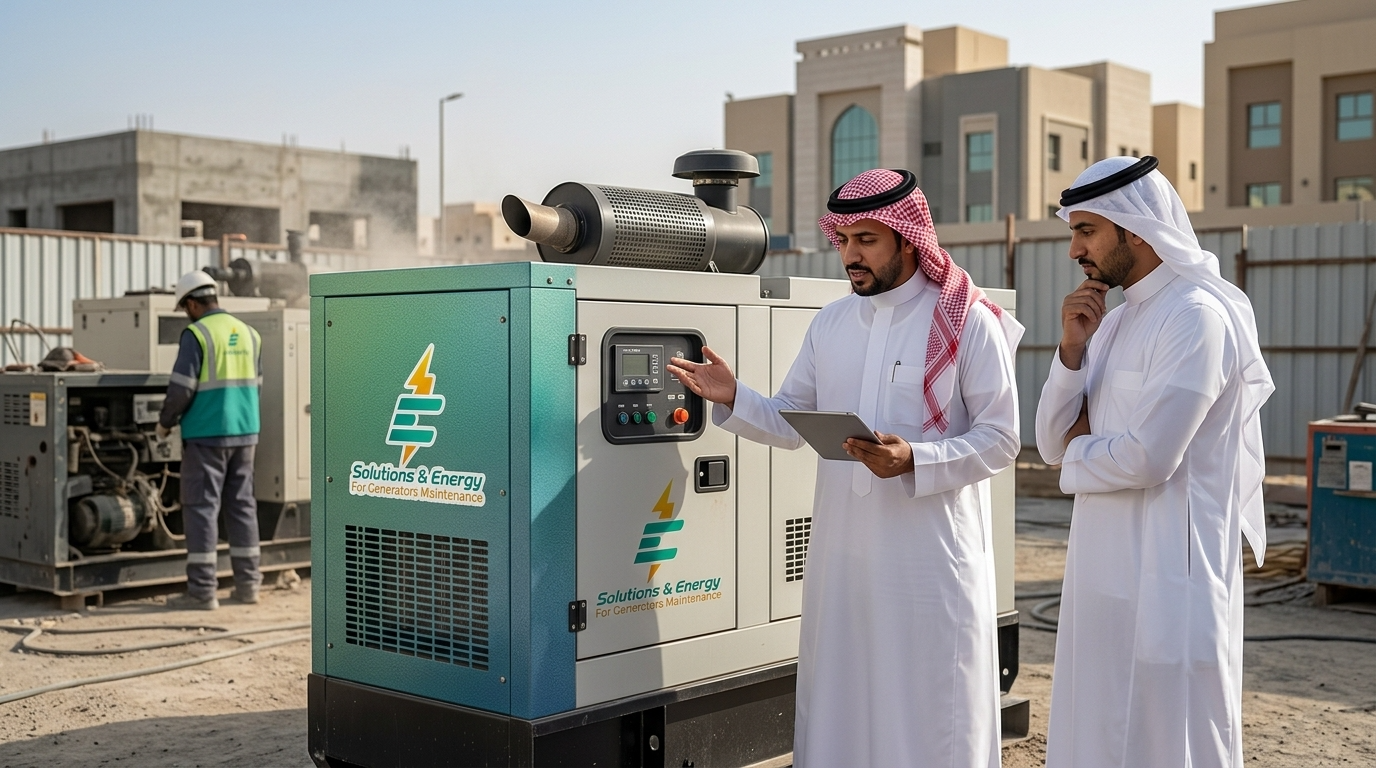

When commercial facilities with Electric Generators Store, factories, construction sites, or even specialized applications require a stable power source, a power generator becomes an essential option to ensure business continuity and prevent equipment downtime during grid power outages. Given the wide range of types, sizes, and applications, choosing the right generator requires an understanding of key fundamentals before buying or renting.
In this guide, we will cover everything you need to know about electric generators—from how they work and their various types, to sizing your load, comparing buying vs. renting, and key tips for extending lifespan while minimizing breakdowns and operating costs.
If you are looking for a power generator supplier offering solutions for commercial, industrial, and project-based applications, you can explore S-Energy’s services and products tailored to your specific requirements.
What Is an Electric Generator and How Does It Work?
An electric generator is a device designed to convert mechanical energy into electrical energy to power various devices, equipment, and systems. Contrary to popular belief, a generator does not “create” energy out of nowhere; rather, it converts energy from one form to another through an integrated system typically consisting of an engine, an alternator, and control/protection components.
Operation relies primarily on a fuel-driven engine—most commonly diesel for commercial and industrial uses. The engine produces mechanical movement, which is transferred to the alternator to generate usable electrical current.
While features and setups vary by model, most modern power generators feature digital control panels to monitor voltage, frequency, engine temperature, oil pressure, and other critical indicators.
Selecting the correct unit based on actual usage is crucial: running a generator under capacity continuously strains the engine and components, whereas selecting a significantly oversized unit inflates purchasing and operating costs without added benefit.
Why Do You Need a Power Generator?
While a power outage may only cause minor inconvenience at home, it can be critical in other settings. Imagine a manufacturing plant operating continuous equipment, a supermarket with refrigeration units, or a construction site relying on electric tools throughout work shifts.
In these cases, a generator acts as a critical backup power source, maintaining operations and preventing financial loss.
Key applications relying on power generators include:
- Manufacturing plants and industrial facilities
- Construction sites and civil projects
- Warehouses and storage facilities
- Retail stores and commercial malls
- Corporate offices and administrative buildings
- Event management and outdoor venues
- Remote locations off the main grid
- Critical equipment requiring uninterrupted power supply (UPS support)
A power generator is not merely an insurance policy against outages; it is a vital operational component for business continuity.
When Do You Need a Standby Generator?
You don’t need to wait for a power outage to start thinking about a backup source. In many projects, generators are planned during the design phase—especially where power interruptions compromise production, equipment integrity, or service delivery.
A standby generator becomes essential when facilities run non-stop critical loads, suffer frequent power cuts, or operate in locations far from reliable power grids.
Additionally, temporary generators are ideal during initial construction phases before permanent utility connections are active. Renting a generator in such scenarios provides a practical, cost-effective alternative to purchasing equipment for short-term use.
Conversely, if a project requires permanent, multi-year power generation, buying a unit may be the more economical route based on a long-term cost-benefit analysis.
Types of Power Generators and Their Uses
No single generator fits all applications. Generator types and prices vary based on output capacity, fuel type, operation mode, environment, and specialized specifications.
Diesel Generators
Diesel generators are the gold standard for commercial and industrial applications requiring high power output and continuous heavy-duty operation. They are renowned for their reliability and long runtimes under proper maintenance routines.
When selecting a diesel generator for industrial or commercial projects, the decision should be based not only on peak power output, but also on expected operating hours, load characteristics, and site environmental conditions.
Gasoline Generators
Gasoline (petrol) generators are generally used for lighter duty, smaller capacities, or temporary power needs. They suit light tools and small sites, provided the specifications match the required electrical load.
Standby Generators
Standby systems are designed to automatically supply emergency power when the primary grid fails. Connected to an Automatic Transfer Switch (ATS), they seamlessly transition power with minimal interruption—vital for mission-critical facilities.
Portable Generators
Portable units offer easy transportability across temporary job sites or locations without permanent infrastructure. However, due to their limited power output, they are unsuitable for heavy industrial loads.
How to Choose the Right Generator Capacity
A common mistake is selecting a generator based solely on nominal power output without calculating actual electrical loads. Sizing requires listing all equipment, calculating their running wattage, and factoring in starting wattages.
Inductive loads (e.g., electric motors, pumps, compressors) require significantly higher inrush current during startup than during normal operation. Simply summing up continuous running power is often insufficient.
Additionally, evaluate whether loads will operate simultaneously or intermittently. Consulting a power application engineer before purchase ensures accurate sizing, avoiding under-powering (which damages the unit) or over-powering (which wastes capital).
What Is the Difference Between kW and kVA?
When browsing generators, you will frequently encounter the terms kW (Kilowatts) and kVA (Kilovolt-Amperes).
- kW (Real Power): The actual power consumed by electrical equipment to perform useful work.
- kVA (Apparent Power): The total power supplied to the electrical system.
The relationship between kW and kVA depends on the system’s Power Factor (PF). Properly matching the generator to load power factors is essential to ensure operational compatibility.
Buying vs. Renting a Generator
The choice between purchasing and renting depends on duration, project lifecycle, and capital expenditure (CapEx) budget.
| Consideration | Buying | Renting |
| Best For | Long-term, permanent, or daily operational needs | Temporary construction, short-term events, or seasonal peak loads |
| Capital Investment | High initial investment | Low upfront cost (OpEx) |
| Maintenance | Owner responsible for servicing and repairs | Provider handles maintenance, repairs, and replacements |
| Flexibility | Fixed capacity asset | Scalable capacity; change units as project needs evolve |
If your power requirement is temporary, exploring generator rental solutions allows you to secure reliable power without owning long-term depreciating assets.
Factors Influencing Power Generator Prices
When comparing power generator prices, you may notice significant price gaps between models of similar rated power output. Key price drivers include:
- Power Capacity (kVA/kW rating)
- Engine & Alternator Brand Quality (e.g., Cummins, Perkins, Caterpillar, Stamford)
- Fuel System Efficiency
- Enclosure Type (Open-frame vs. Soundproof / Weatherproof canopy)
- Control Panel Sophistication & ATS Integration
- Fuel Tank Capacity
- Emissions Standards Compliance
- Installation & Commissioning Requirements
- Warranty Coverage & After-Sales Technical Support
When evaluating prices, consider the Total Cost of Ownership (TCO) over the unit’s operational lifespan—including fuel consumption, maintenance, spare parts, and service availability—rather than just the initial purchase price.
Does a Lower Price Mean a Better Deal?
Not necessarily. Two generators with similar output ratings may differ dramatically in component durability, build quality, safety systems, fuel economy, and spare parts availability.
An inexpensive unit with poor fuel efficiency or frequent downtime quickly becomes more costly over time. The goal is balancing specifications with actual operational demands to maximize Return on Investment (ROI).
The Importance of Routine Generator Maintenance
Even top-tier industrial generators require regular preventive maintenance. Maintenance is not merely reactive repair after a breakdown; it is essential for maintaining efficiency and avoiding costly downtime.
A standard maintenance routine includes:
- Inspecting engine oil, filters (oil, fuel, air), and coolant levels
- Battery health checks and terminal cleaning
- Inspecting electrical connections and control devices
- Monitoring operating indicators per manufacturer guidelines
- Timely replacement of consumables based on running hours
To keep your fleet running smoothly, professional maintenance services help prevent catastrophic engine failures.
Common Mistakes That Shorten Generator Lifespan
Avoid these common operational pitfalls to protect your generator investment:
- Overloading: Continuous operation near or above maximum capacity leads to overheating and premature component wear. Always maintain an operational safety margin.
- Neglecting Oil & Filter Changes: Degradation of oil increases mechanical friction, while clogged filters starve systems of air and fuel.
- Ignoring the Cooling System: Overheating damages engine blocks and cylinder heads. Regularly check coolant levels, radiator cleanliness, and hoses.
- Using Low-Quality or Contaminated Fuel: Poor fuel leads to injector clogging, water contamination, and combustion issues.
- Extended Inactivity: Leaving a generator idle for months without exercising it degrades seals, batteries, and fuel. Run standby units periodically under load testing.
- Ignoring Abnormal Sounds or Vibrations: Unusual noises or excessive vibration indicate mechanical looseness or misalignments. Early diagnosis prevents minor issues from escalating.
Proper Installation and Commissioning
Purchasing the right generator is only half the battle; proper installation dictates long-term performance and site safety.
Installation considerations include:
- Ventilation and air clearance for cooling and exhaust discharge
- Structural pad stability and vibration isolation
- Electrical integration via proper transfer switches (ATS/MTS) and circuit breakers
- Compliance with local electrical, environmental, and noise regulations
For large-scale commercial setups, professional engineering site surveys ensure seamless integration with existing power distribution networks.
Frequently Asked Questions (FAQ)
Q: What is the best power generator brand or type?
A: There is no single “best” unit. The optimal choice depends on your required kVA load, running hours (prime vs. standby), environmental constraints, and budget.
Q: How do I calculate the required generator size?
A: Calculate the total running power (watts/amps) of all connected equipment, account for motor starting currents (inrush kVA), and apply a 20–25% safety margin for potential future expansion.
Q: Is renting better than buying a generator?
A: Renting is preferable for short-term projects, temporary utility backup, or seasonal needs. Buying is more cost-effective for permanent facilities with continuous power needs.
Q: How often does a generator need servicing?
A: Routine checks should happen weekly or monthly, with major oil/filter service recommended every 250 to 500 operating hours (or annually, whichever comes first), depending on manufacturer guidelines.
Make an Informed Generator Selection
A power generator is a core component of your operational infrastructure. Making the right decision starts with a thorough understanding of your actual load requirements, operating conditions, and maintenance commitments.
Whether you need to purchase a new industrial power generator, secure a temporary generator rental, or establish a preventive maintenance schedule for your existing assets, consulting with energy specialists ensures long-term operational success.
For tailored power solutions, equipment sales, rentals, and maintenance services, reach out to S-Energy to explore options customized to your project’s needs.